Velobet Payment Methods for UK Players: Cards, E-Wallets and Crypto
 Available in GB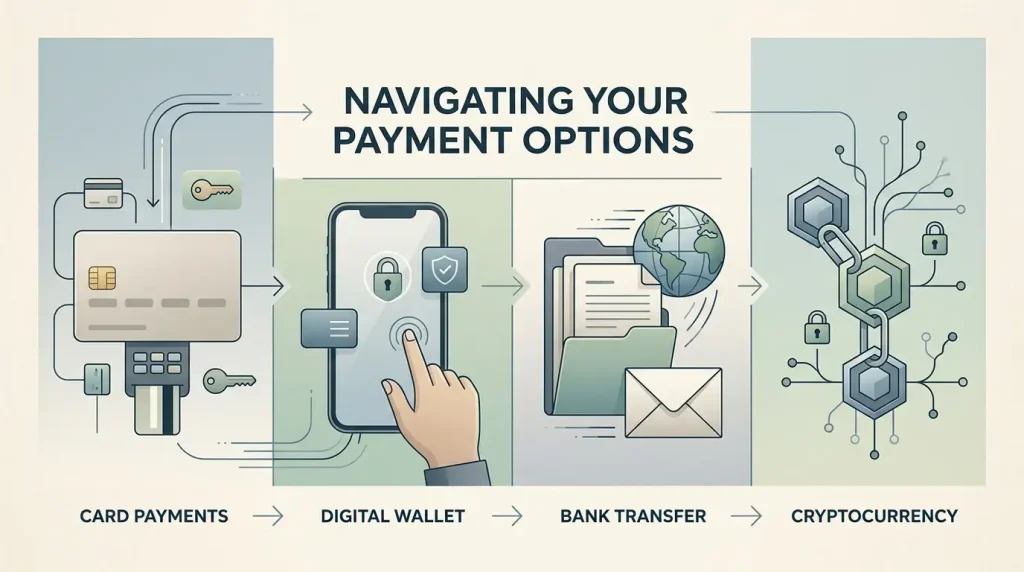
Velobet supports card, e-wallet, bank-transfer and cryptocurrency payment options. Examples include Visa, Mastercard, Skrill, Neteller, bank transfer, Bitcoin, Ethereum, Litecoin and Tether, while GBP is listed among supported currencies. Method availability can vary by account, so the cashier is the final check before depositing. Great Britain rules for UKGC-licensed gambling include a credit-card ban, but that rule should not be treated as a statement about how Velobet itself handles every payment route.
Table of Contents
- Velobet payment methods at a glance
- Cards: convenient, but card type matters
- Skrill and Neteller: the e-wallet route
- Bank transfer: a straightforward direct route
- Crypto payments: flexible, but with extra operational risk
- GBP support: useful, but verify the transaction currency
- Great Britain credit-card rules are separate from Velobet’s cashier
- How to choose between card, wallet, bank and crypto
- A five-point cashier check before depositing
- Payment method choice is also an account-management decision
- Which Velobet payment route is most practical for a UK account
- Check the complete payment route
Velobet payment methods at a glance
| Category | Examples | Practical consideration |
|---|---|---|
| Cards | Visa, Mastercard | Familiar route, but card type and account eligibility must be checked in the cashier. |
| E-wallets | Skrill, Neteller | Can separate gambling transactions from the main bank card flow, subject to wallet and cashier rules. |
| Bank transfer | Bank transfer | Direct bank route that may suit users who prefer not to use a wallet or crypto. |
| Cryptocurrency | Bitcoin, Ethereum, Litecoin, Tether | Useful only if you understand wallet addresses, network choice and crypto price risk. |
| Account currency | GBP is listed as supported | Check the account and cashier display before assuming every transaction settles in GBP. |
These are supported categories and examples, not a guarantee that every option appears for every account. Payment menus can vary by country, account status, processor availability, account currency, payment direction and transaction type.
Before choosing a route, think about both directions of the transaction. A method that is convenient for depositing may not be the route ultimately offered for a withdrawal, particularly once identity checks, payment ownership and processor rules are involved. Confirm the deposit method, the displayed currency and the available cash-out instructions before relying on one payment path for the whole account lifecycle.
Cards: convenient, but card type matters
Visa and Mastercard are among Velobet’s supported payment options. For many UK users, cards are a familiar way to move money online, and debit cards remain the dominant payment method in the wider UK market.
The key is not to turn that general card support into an assumption about a specific card. The cashier should show whether your card type is accepted. Deposit limits, fees and processing details can change, so confirm the figures shown for the transaction you are about to make.
Skrill and Neteller: the e-wallet route
Skrill and Neteller are supported e-wallet options at Velobet. E-wallets can suit people who prefer to keep gambling transactions within a separate payment account rather than repeatedly entering bank-card details.
The trade-off is another layer of rules. A wallet can have its own verification requirements, funding restrictions and fees, while the casino can impose separate cashier conditions. Before depositing, check both sides: what the wallet allows and what Velobet shows for the account.
Great Britain regulation is relevant here but must be framed correctly. For gambling operators licensed by the Gambling Commission, the credit-card ban also covers e-wallet payments where the wallet can be funded by credit card. The Gambling Commission requires licensed operators to prevent that route. This is market regulation for GB licensees, not evidence that every offshore cashier implements the same controls. Gambling Commission guidance explains the rule.
Bank transfer: a straightforward direct route
Bank transfer is also a supported payment category for Velobet. It can suit users who prefer a direct bank-to-merchant path and do not want to set up a separate e-wallet or cryptocurrency wallet.
Bank-transfer speed and fees can vary. Check the current cashier for deposit conditions and the Velobet withdrawals guide for cash-out considerations.
Crypto payments: flexible, but with extra operational risk
Velobet supports cryptocurrency payments, with Bitcoin, Ethereum, Litecoin and Tether among the supported examples. Crypto can appeal to users who already hold digital assets and are comfortable moving funds between wallets. It can also create a payment path that is operationally separate from a conventional card or bank transfer.
That flexibility comes with additional responsibilities. Wallet addresses must be copied correctly, the right asset and network must be selected, and transfers can be difficult or impossible to reverse once broadcast. Stablecoins such as Tether can reduce exposure to price swings relative to assets such as Bitcoin or Ethereum, but they do not remove wallet, network or counterparty risk.
Do not assume that every supported cryptocurrency is available in every account or that the list is permanent. The current cashier is the place to confirm the active coins, network instructions and any displayed transaction conditions before sending funds.
GBP support: useful, but verify the transaction currency
GBP is listed among Velobet’s supported currencies. For a UK user, that can reduce the need to mentally convert balances and may avoid some currency-conversion friction. GBP is listed as supported, but check the actual account and cashier display before funding.
A supported account currency does not automatically prove that every payment processor settles natively in that currency. Your bank, card issuer, wallet or crypto on-ramp can apply its own conversion logic. Before confirming a payment, check the amount, currency and any fee line shown by both the cashier and the external payment provider.
Great Britain credit-card rules are separate from Velobet’s cashier
The Gambling Commission bans credit-card gambling for consumers using gambling services licensed in Great Britain. The rule covers online betting, casino and bingo, and it extends to e-wallet routes funded by credit cards. That is a rule attached to the GB-licensed market and should not be confused with a statement that Velobet itself is UKGC-licensed or that its cashier necessarily applies the same controls.
Great Britain payment regulation explains the rules for UKGC-licensed gambling, but it should not be used to infer Velobet-specific cashier behaviour. For Velobet, check the payment categories and the methods shown in the account-level cashier. For licensing context, see the Velobet licence and UK status guide.
How to choose between card, wallet, bank and crypto
| If you value… | Start by checking… | Watch for… |
|---|---|---|
| Familiarity | Debit-card availability | Card type, issuer restrictions and displayed fees |
| Separation from your main card | Skrill or Neteller | Wallet verification, wallet fees and source-of-funds rules |
| Direct bank movement | Bank transfer | Processing route and withdrawal compatibility |
| Digital-asset use | Supported crypto and network | Address accuracy, network choice and price risk |
| Simple budgeting in sterling | GBP account display | Any conversion by the payment provider |
The best route is the one you understand well enough to predict what happens before, during and after the transaction. Convenience alone is not enough if the method makes fees, reversibility or record-keeping harder to understand.
Record-keeping is especially useful when more than one payment service is involved. Save the amount, currency, date and provider reference shown after a transaction, then compare those details with the account history. If a transfer is delayed or disputed, a clear reference trail is more useful to support than an estimate from memory, and it avoids turning a payment question into a guess about the platform.
A five-point cashier check before depositing
- Confirm the method is visible. Use the logged-in cashier rather than an old review or cached payment list.
- Check the displayed currency. If you expect GBP, confirm that the transaction screen actually shows GBP.
- Read the amount and fee lines. Do not assume a fixed minimum, maximum or fee from a generic guide.
- Check withdrawal compatibility. Some operators prefer or require withdrawals to return through the same or a related route, subject to verification and payment rules.
- Keep a record. Save the transaction confirmation and payment-provider reference so you can reconcile the transfer later.
If a deposit is being made to qualify for a promotion, also read the Velobet bonus guide and the current promotion terms before paying. Payment eligibility and bonus eligibility are separate questions.
Payment method choice is also an account-management decision
A payment method becomes part of your account history, so consistency can make later checks easier. Repeatedly switching between cards, wallets and crypto addresses can create more records to reconcile and may complicate verification if the operator asks for evidence of ownership or source of funds.
That does not mean one route is always superior. It means the operational cost of a payment method should be considered alongside speed and convenience. Before making a first deposit, complete the basic Velobet registration and account setup checks so your account information is accurate and consistent with the payment details you intend to use.
Which Velobet payment route is most practical for a UK account
Velobet’s payment coverage includes cards, e-wallets, bank transfer and cryptocurrency. Visa, Mastercard, Skrill, Neteller, Bitcoin, Ethereum, Litecoin and Tether are supported examples, and GBP is listed as a supported currency.
Choose from the methods actually shown in the live cashier, confirm the currency and transaction terms, and use a route whose fees, reversibility and record-keeping you understand. Keep Great Britain payment regulation separate from Velobet-specific cashier behaviour and licensing status.
For the broader operator assessment, return to the full Velobet review.
Check the complete payment route
Before depositing, look beyond the funding screen and consider how money may later leave the account. Confirm the currency, ownership requirements and withdrawal options displayed for the account. Keep the transaction reference after payment, and avoid repeatedly trying different methods if a transaction is declined. The cashier message or official support route is the appropriate place to establish whether the issue relates to the method, account status or verification.
Crypto transfers require an additional address and network check because a transfer sent through the wrong route may not be recoverable. Use only the details currently displayed by the cashier and verify them for the specific transaction.