Online European Roulette in the UK: Rules and Odds
 Available in GB
See how roulette outcomes relate to wager choices, and how European roulette differs from other formats and roulette-branded slots.
Table of Contents
- How a European Roulette Spin Works
- Choosing a UK Casino for European Roulette
- Place Bets and Read the Payouts
- RNG, Speed and Live Roulette Formats
- The Single-Zero Layout and Inside Bets
- Demo Play, Real Money and Account Controls
- Reading the European Roulette Table
- Roulette-Branded Slots and Their Different Rules
- Live Dealers, Licensing and Player Protections
- European, American and French Roulette Compared
How a European Roulette Spin Works
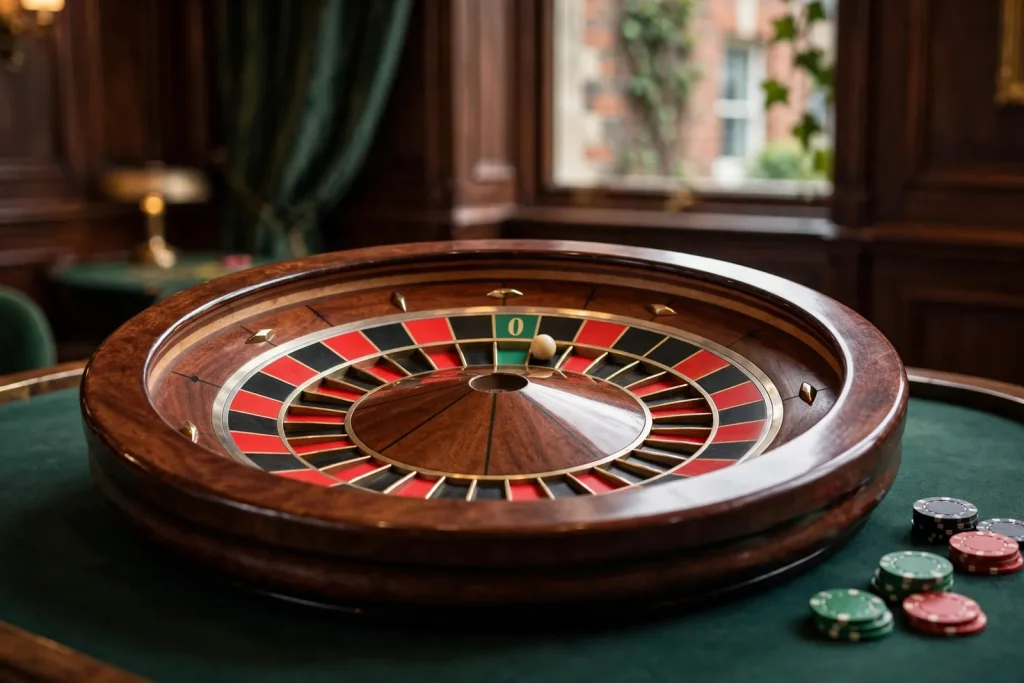
A European roulette wheel has 37 pockets: one marked zero and the others numbered from 1 to 36. For each spin, the ball comes to rest in one pocket. The number shown there is the result. The single zero is not an extra number outside the sequence; it is one of the possible outcomes alongside the numbered pockets.
To understand the odds, separate the wheel’s outcomes from the wager you place. The wheel determines which pocket wins. Your wager defines which results count as a win for you. A bet that covers one specific number has fewer winning outcomes than a bet covering a broader category. The wheel’s 37 pockets stay the same either way, but the chance of matching your selection changes with the number of pockets it covers.
Assuming each pocket is equally likely on a fair wheel, a selection covering one pocket has a chance of one outcome in 37. A selection covering several pockets has a chance equal to the number of covered pockets out of 37. This is the basic relationship behind roulette probabilities: count the outcomes that would make the wager win, then compare that count with all possible outcomes. The calculation concerns the wheel result, not whether a player has won or lost on previous spins.
When considering online European roulette in the UK, payout timing is one practical detail to check. The verdicts below stick to the information available for each operator.
1. x3bet
Payout speed: 1-3 business days x3bet lists a payout speed of 1–3 business days. You can use this as a reference when considering how long a payout may take.
2. SpinFormula
Payout speed: 1-3 business days SpinFormula lists a payout speed of 1–3 business days. You have a stated timeframe to keep in mind when reviewing its payout information.
3. Zombillion
Payout speed: 1-3 business days Zombillion lists a payout speed of 1–3 business days. This gives you a specific timeframe to consider for payouts.
4. NightLuck
Payout speed: 1-3 business days NightLuck lists a payout speed of 1–3 business days. You can factor that stated timeframe into your assessment.
5. Revery Play
Payout speed: 1-3 business days Revery Play lists a payout speed of 1–3 business days. This is the available practical detail for you to consider about payout timing.
6. BeOnBet
Payout speed: 1-3 business days BeOnBet lists a payout speed of 1–3 business days. You can use the stated timeframe as one point of reference.
7. SlotoSport
Payout speed: 1-3 business days SlotoSport lists a payout speed of 1–3 business days. Keep this timeframe in mind when considering payout arrangements.
8. EvoSpin
Payout speed: 1-3 business days EvoSpin lists a payout speed of 1–3 business days. You have a stated payout timeframe to take into account.
9. Amunbet
Payout speed: 1-3 business days Amunbet lists a payout speed of 1–3 business days. This stated timeframe is the available detail to guide your consideration of payouts.
10. WinBeast
Payout speed: 1-3 business days WinBeast lists a payout speed of 1–3 business days. You can consider this timeframe when reviewing payout timing.
The zero matters because it is a possible result that does not belong to the numbered sequence from 1 to 36. If your selection does not include zero, the ball landing there means that selection has not matched the result. The pocket therefore affects the chance of winning even though it is only one space on the wheel. A wheel with no zero would have a different set of possible outcomes, and the same wager would not have the same probability.
The house edge expresses the casino’s theoretical advantage across roulette wagers, rather than predicting the result of a particular spin. For European roulette, that edge is 2.70%. It arises from the relationship between the possible outcomes and the amount returned when a wager wins. In the long-run mathematical model, the casino retains that proportion of the total amount wagered; it does not mean that the casino wins that share of every individual stake or every session.
This distinction matters when you interpret the percentage. A spin can produce a result that favours the player, even though the game has a house edge. The edge describes the expected balance across repeated play under the stated rules, not a timetable for losses or a forecast of the next outcome. Short runs can differ from the long-run expectation because each result is uncertain.
A single-zero wheel also does not make every wager equally likely to win. The chance depends on what the wager covers. If it covers one possible result, only that result is a match; if it covers a wider set, more results can qualify. Those wider selections have a different chance of success, and their payouts are set to reflect the wager’s coverage and the wheel’s outcome structure. The detailed bet types and their payouts are a separate part of the game, but the underlying denominator remains 37.
The house edge and the chance of winning are related, but they are not interchangeable. The chance of winning answers: how many wheel results satisfy this wager? The house edge answers: how does the game’s payout structure affect the expected return over time? A wager can win more frequently than another and still have a lower expected return if its payout is adjusted accordingly. You therefore cannot assess a bet from its win frequency alone.
Online Casino Without ID in the UK: Age Checks
For online European roulette, the same wheel structure applies whether the result is presented digitally or through a streamed physical wheel: the European format is defined by its 37 pockets and one zero. The interface may show a result and a record of earlier spins, but those displays do not change the wheel’s set of possible outcomes. A sequence of previous results is history, not a mechanism that makes a particular pocket due on the next spin.
When you assess a spin, start with three separate questions: what are the possible wheel outcomes, which of those outcomes match your wager, and how does the payout compare with that chance? The single zero is central to the first question and, through the game’s payout structure, to the 2.70% house edge. Keeping probability, payout and past results distinct makes the mechanics easier to follow without treating a roulette spin as predictable.
Choosing a UK Casino for European Roulette
A useful comparison starts with the games themselves, not the number of roulette tiles in a lobby. Check that the operator offers European roulette as a table game, then open its information panel and confirm the rules and published return to player (RTP). Similar-looking titles can use different rules, and a roulette-themed slot is not the same product as a roulette table. The game’s title alone is not enough to identify its format.
RTP information should be accessible before you commit to a wager. Look in the game’s help or rules panel, and check whether the figure applies to the specific version you are considering. If it is absent, difficult to locate or presented without explaining which game it covers, you cannot make a sound comparison on that basis. RTP is a theoretical measure across many plays, not a forecast of what you will receive from an individual session.
Compare the game provision
A casino’s roulette selection can differ in more than the wheel graphic. Check whether the game is simulated or streamed from a physical wheel, whether the table uses European rules, and whether its rules panel explains the available bets and payouts. These details affect what you are actually playing; a European label in a lobby does not answer every question about the table.
Online Bingo in the UK: Games, Tickets and Slots
Also consider whether the games are usable at the stakes you intend to choose. Minimums can differ between tables and formats, so inspect the individual game rather than assuming that one displayed stake applies across the casino. A large catalogue is not necessarily useful if the particular table you want has terms or a minimum that does not suit your budget.
Read bonus terms as game-specific rules
If you plan to use bonus funds, find the casino’s wagering terms before accepting them. Roulette may count towards a wagering requirement at a different rate from other games, and the rate can vary by operator and format. The general industry picture is that many UK operators count roulette wagers at 10%–20%; a separate specialist review reports that some terms give live roulette a 10% or 20% game weighting while RNG roulette can receive full weighting. Treat those figures as points to check against the current offer, not as a promise about every casino.
Read the exact wording for the table you expect to use. Some terms distinguish live roulette from RNG games; others may exclude a format or apply different weighting. A wager that counts at a low rate makes less progress towards a bonus requirement than a wager counted in full. That can change how much play is needed before the bonus terms are met, even when the displayed bet size is identical. Check whether the rules also change once a bonus is active, and whether the game is eligible at all.
A specialist review reports that a wagering cap of ten times the bonus amount took effect for licensed operators in January 2026. Because this claim concerns a regulatory change and offer terms can still vary, confirm the applicable requirement in the operator’s current bonus conditions rather than relying on a general description.
Judge the information, not the marketing
For a practical shortlist, compare the same details across casinos: whether European roulette is clearly identified, whether the rules and RTP are available before play, and how the specific table contributes to any bonus requirement. Clear, consistent information lets you decide without having to infer a game’s terms from a promotional label.
Live Dream Catcher Casino UK: How the Game Works
If a casino advertises roulette as suitable for bonus play but does not state the relevant game weighting, pause before accepting the offer. Likewise, if the RTP panel does not identify the game it describes, ask the operator for clarification or choose a table with accessible information. These checks do not predict results; they help you understand the product and conditions before you stake money.
Place Bets and Read the Payouts
A roulette wager has two parts: the outcome you select and the stake you place on it. Once betting closes, the wheel’s result determines whether that selection wins. The payout tells you how much you receive in winnings relative to your stake; it is not the same as the probability of winning.
A straight-up bet selects one number. If that number wins, the payout is 35:1: a winning stake earns 35 times its value, and the original stake is returned as well. For instance, a £1 winning stake produces £35 in winnings, plus the £1 stake. A larger payout reflects the narrowness of the selection; it does not mean the result is more likely than an outside-bet result.
Outside bets cover broader categories. Red or black, odd or even, and low or high each pay 1:1. A winning stake therefore earns an amount equal to the stake, with the stake returned. These bets can be easier to follow because the selection covers many numbers, but a zero can change the settlement of an even-money wager.
What happens when zero lands
On a standard European table, an even-money bet loses when the ball lands on zero. Where La Partage applies, the casino returns half of the stake on that result instead of keeping all of it. The rule applies to even-money bets such as red or black, odd or even, and high or low; it does not turn a losing selection into a win.
Chicken Road Game in UK Casinos: Format and Risks
La Partage reduces the house edge on those bets to 1.35%. That lower edge is specific to the qualifying even-money wagers under the rule. It does not change the quoted 1:1 payout when your selection wins, nor does it apply to a straight-up bet on one number. Check the table’s rules before placing a wager, because the settlement depends on whether La Partage is offered.
Reading a payout before staking
Before you confirm a bet, identify exactly what outcome would make it win, then check its displayed payout and any special table rule. For a single-number selection, the stated 35:1 payout is the return if that number lands. For an even-money selection, 1:1 is the return on a win; if zero appears and La Partage is in force, only half the stake is returned.
This distinction helps you compare bets without treating a larger payout as a better chance. A payout describes the amount paid after a win, while the selection determines which results count as wins. If you play European roulette online, read the rules shown for that specific table before confirming the stake. You can then calculate what a win returns and understand what happens to an even-money stake if zero lands, rather than relying on the bet label alone.
RNG, Speed and Live Roulette Formats
The main difference between roulette formats is how each spin is produced and how long you wait before the next one. In an RNG game, software uses a random number generator to produce the result. A physical-wheel game instead uses a real wheel; the pace then depends on how the table is run and how quickly bets are placed and settled.
RNG roulette removes the pauses involved in running a physical table, so spins can happen more quickly. It can also make European roulette accessible at a lower stake: RNG tables may have minimums as low as 10p. That can suit you if you want to keep each wager small or play at your own pace. Faster rounds still mean you can place wagers more often, so set a pace and stake that you can maintain rather than treating speed as an advantage.
Keno Online Casinos in the UK: Odds and Rules
Speed depends on the format
A standard table has a longer cycle because bets need to close, the ball must land, and the result must be settled before the next round begins. Speed roulette shortens that cycle. A specialist review reports that speed roulette can exceed 150 spins per hour, compared with 80–100 at a standard table. These are reported rates, not a promise that every game will run at the same pace: pauses and table procedures affect how many rounds you actually see.
Auto-roulette and speed roulette are not the same as RNG games simply because they move quickly. They are separate formats, and the available minimum stake can differ between tables. A specialist review reports UK live roulette minimums starting at 10p, while auto-roulette and speed formats sometimes begin at 5p. Treat those figures as examples of reported table minimums, not as terms available at every casino. Check the specific game’s displayed minimum before joining.
Choosing by pace and stake
If you prefer frequent rounds and low entry stakes, an RNG table may fit better: results are simulated, and minimums can be low. If you want a physical-wheel format, compare the table’s minimum and pace before you play. A standard table gives you more time between rounds than speed roulette, while auto-roulette may offer a different combination of pace and stake.
The European roulette wheel itself does not change merely because you choose a different format. The format affects how the spin is generated or conducted, how quickly another wager can be placed, and what minimum the table accepts. It does not make outcomes predictable. Select based on the time you want between decisions and the stake you are comfortable placing, then check the game rules and table limits shown on screen.
The Single-Zero Layout and Inside Bets
On a European roulette betting grid, the numbered area is arranged in three vertical columns, with the numbers running across horizontal rows. The zero occupies its own green space beside the numbered grid rather than sharing a row with other numbers. This gives the table its single-zero layout: a wager can cover the zero, numbers on the grid, or a combination of neighbouring spaces, but the position of the wager determines which outcomes count as a win.
Best Progressive Jackpot Slots: How They Work
Inside bets are placed directly on the numbered section. A straight-up bet covers one number. A split bet covers two adjacent numbers, with the chip placed on the line between their spaces. Because either number wins, the bet covers more outcomes than a straight-up wager; its payout is 17:1. The chip’s position matters: it must sit on the shared border, not wholly inside one number’s space.
A street bet covers a horizontal row of three numbers. Place the chip at the outer edge of that row to include all three. The payout is 11:1. This is a different selection from a column bet: a street follows a row across the grid, while a column bet follows a vertical run. The names describe the covered positions, not a different wheel or spin.
Other inside wagers use boundaries and intersections to cover neighbouring numbers. A corner bet sits at the junction of four spaces; a line bet covers two adjacent rows. These positions let you select a group rather than a single number, but the payout depends on the precise bet type shown by the table. Check the table’s displayed rules before placing one, especially when moving between games: a familiar-looking grid does not by itself confirm that every rule or payout is identical.
The grid’s geometry explains the trade-off. Covering more numbers makes it more likely that a spin lands within your selection, but the payout is smaller than for a wager covering fewer numbers. That does not make a larger selection a way to improve the underlying value of a bet. On a standard European game, the house edge is 2.70%; choosing a different inside position changes the set of winning outcomes and the payout, not the wheel’s single-zero structure.
The chip placement can be more important than the name you have in mind. If a chip straddles the line between two spaces, it marks a split; if it sits at the junction of four, it marks a corner. When the interface offers betting markers or highlights, use them to confirm which spaces are covered before the betting period closes. A small positional difference can change the wager from one type to another.
Mines Casino Game in the UK: Rules and Licensing
The zero is outside the numbered grid and is not included in a street or other group of numbered spaces merely because the wager is close to it. To cover zero, select its own space or a defined bet that includes it. This is why reading the chip’s coverage on screen matters: the layout is a map of the wager, and the map—not the chip’s general proximity—determines the result.
Demo Play, Real Money and Account Controls
A European roulette demo lets you use the game without staking cash. It can help you learn how the interface handles bets, confirms a selection and displays a result, but it does not reproduce the financial consequences of wagering. Any balance shown in demo mode is for play within that mode; it is not money you can withdraw. A free online roulette game is therefore practice, not a route to real-money winnings.
Moving to real-money European roulette changes what is at stake and what checks apply. In Britain, online gambling is legal for people aged 18 and over when it is offered by a UKGC-licensed operator. Before allowing you to deposit into a gambling account, the operator must verify your age. You may also be asked to complete account checks before using real-money features. Do not treat access to a demo as evidence that those checks have been completed or that real-money play is available.
Before your first deposit, a remote operator must prompt you to set a financial limit. Account-level controls must also be accessible so you can manage limits later. Set a limit that reflects what you can afford to lose, and check how the control works before adding funds: a deposit limit governs how much you can put into the account, while other limit settings may address different aspects of play. Read the operator’s explanation rather than assuming that one setting controls every type of spending.
Payment rules also apply when you fund an account. UKGC licensees cannot accept credit cards for gambling. The restriction also covers credit-card funds routed through a money service business, and an operator cannot accept wallet payments where the wallet permits credit-card funds to be used for gambling. A payment method appearing in a cashier does not override these restrictions; check its funding source and the operator’s terms.
Demo play can still be useful when you want to understand the controls without risking money. Once you switch to real-money play, pause to review your account limits and the operator’s terms, including how to close or restrict access to the account. These are separate decisions from choosing a roulette bet: a practice session carries no cash stake, while real-money play uses deposited funds and is subject to age checks and account safeguards.
Reading the European Roulette Table
The table is a betting map: each marked area corresponds to a number or group of numbers. On a standard European layout, the main grid contains the numbers from 1 to 36, arranged in three vertical columns. The numbers run across each row in groups of three: 1, 2 and 3 form one row, followed by 4, 5 and 6, continuing through to 34, 35 and 36. The single zero sits apart from this numbered grid, in its own green space.
To place a wager, you select the area that matches the outcome you want to cover. A chip on one numbered square selects that number alone. Areas along the edges of the grid refer to groups in a column or a sequence of rows. The marked boundaries matter: a chip must sit on the intended square or line, and the position determines which numbers the wager covers.
The bands beyond the grid are for outside bets. These include red or black, odd or even, and low or high groups. A chip on one of these larger areas covers several numbers rather than a single square. The green zero is not part of the red or black groups, the odd or even groups, or the low or high groups. That distinction is useful when reading the table: an outside bet may cover many numbered squares without covering every possible result.
Some layouts also mark groups such as dozens and columns. These labels make it easier to identify a set of numbers without selecting each square individually. Check the printed boundary before placing a chip; the label, not its visual closeness to the grid, defines which numbers are included.
The green zero is not part of the red or black, odd or even, or low or high groups, meaning an outside bet may cover many numbers without covering every possible result.
The same basic arrangement appears on a European roulette casino table whether you view it on screen or at a physical table. Digital layouts may use smaller labels or different colours, but the betting areas still indicate the covered number or group. If a control panel is present, confirm that the selected chip value and highlighted area match your intention before confirming the wager.
A layout can help you organise a bet, but it does not provide a predictive pattern. The position of a number on the grid does not make it more likely to appear, and no roulette strategy can predict the final outcome: the result is determined by chance. Use the table to understand what your selection covers, not to infer what the next result will be.
Roulette-Branded Slots and Their Different Rules
A roulette-themed slot is a slot game, not a roulette table. The theme or title may refer to roulette, but the game does not use the standard table’s betting areas and outcomes. You spin reels according to the slot’s rules; you do not place a wager on a number, colour or other roulette outcome. European roulette odds therefore do not describe the chances of winning on a roulette-branded slot.
The title alone is not enough to establish how a game works. Names such as Book of Dead and XXXtreme Lightning Roulette are examples of casino products, but a roulette reference in a product name does not make it a standard roulette game. Before playing, open the game information and read its rules. Check how a spin is settled, what combinations count as wins and where the game displays its return-to-player information. Do not infer a slot’s payout structure from roulette terminology or from another game with a similar name.
That distinction also matters when you compare versions described as three-dimensional, gold or platinum. These labels may help identify a particular product, but they do not, by themselves, tell you its rules, returns or probability of a win. Treat each game as a separate slot and use the information provided for that specific title. A roulette table’s odds cannot be transferred to it.
Online slots in Britain have restrictions that do not apply to roulette tables in the same way. Autoplay is banned, so you must start each slot spin yourself. Each online slot spin must also last at least two and a half seconds. These requirements apply even when the game has a roulette-inspired theme; presentation does not change its classification as a slot.
Stake limits depend on age. The maximum stake per online slot game cycle is £5 for customers aged 25 and over, and £2 for customers aged 18 to 24. The £5 limit for adults came into effect on 9 April 2025; the lower limit for younger adults remains relevant when checking which rule applies to you.
When choosing between a themed slot and a roulette table, compare the actual game rules rather than the imagery. A slot’s result is governed by its own design and published information. A roulette table follows roulette rules. Keeping those categories separate prevents a familiar word in a title from being mistaken for a promise about odds or payouts.
Live Dealers, Licensing and Player Protections
In live European roulette, a camera stream shows a real wheel in a studio, a human dealer and the ball being released and settling into a pocket. You place bets through the online interface while the physical game is shown on screen. The dealer format changes how the game is presented; it does not remove the need to check who operates the service and what protections apply to your account.
For real-money play, confirm that the operator holds a current UK Gambling Commission (UKGC) licence. The Commission oversees online casino activity in Great Britain and is the relevant regulator there. A platform without a valid UKGC licence cannot legally offer real-money live roulette to British residents. Before depositing, look up the operator’s licence number on the UKGC public register rather than relying only on a badge or statement on the site.
Check the account protections before you start. UKGC-licensed live casino operators must make deposit limits, loss limits, session time reminders, reality checks, cool-off periods and GamStop self-exclusion available. New customers must be prompted to set a financial limit before their first deposit, and account-level limit controls must remain accessible. These tools work in different ways: limits restrict activity, reminders make time or play visible, and a cool-off or self-exclusion can interrupt access.
The operator must verify your age before allowing you to deposit. It must also provide an internal complaints process and access to an approved Alternative Dispute Resolution service if a complaint is not resolved through that process. Remote gambling operators cannot accept credit-card payments for gambling, including credit-card funds routed through a money service business; they also cannot accept wallet payments where credit-card funds can be used for gambling. UKGC licensees are required to contribute to the Research, Education and Treatment levy.
When assessing a live casino European roulette table, separate the stream from the service behind it. A clear dealer feed tells you what is happening at the wheel, but it does not establish that the operator is authorised or that account tools are available. Verify the licence and protections directly before you fund an account.
European, American and French Roulette Compared
The main difference between roulette variants is the wheel’s number of pockets and how a zero affects certain bets. That changes the probability of a winning result and, in turn, the casino’s mathematical advantage. When comparing European roulette with American roulette, check the wheel layout and the stated house edge rather than relying on the game’s name alone.
European roulette has 37 pockets: numbers 1 to 36 and one zero. Its house edge is 2.70%. American roulette adds a double zero, giving it 38 pockets in total. That extra losing result for most bets raises the house edge to 5.26%. The difference applies even if the betting layout looks familiar: a red or black wager, for instance, faces an additional green pocket on the American wheel.
French roulette uses a single-zero wheel, but its rules can improve the position of some bets when zero appears. Under La Partage, half of an even-money wager is returned after a zero, rather than the whole stake being lost. This lowers the house edge on those bets to 1.35%. En Prison is another rule associated with French roulette; together, these rules give the French variant the lowest house edge among standard roulette versions.
The edge reduction is conditional, not a blanket change to every wager. La Partage applies to even-money bets, such as red or black, not to every selection on the table. Before placing a bet, check the table rules to confirm which zero rule applies and which wagers it covers.
For an online European roulette casino game, the single-zero wheel and standard rules provide the reference point: 37 pockets and a 2.70% house edge. American roulette has a higher edge because of its extra zero. French roulette can be more favourable on eligible even-money bets because zero triggers La Partage or, where offered, En Prison. These rules change the financial result of specific outcomes; they do not make any spin predictable.
Casino Games

Aviator Casino Game in the UK: What to Check
A practical guide to UK licensing, game mechanics, trial play, bonus terms and the limits...

Best 3-Reel Slots UK: How Online Play Works
A practical guide to layouts, stakes, free play, volatility and features, plus checks for online...

Five-Reel Slots UK: How the Games Work
See how reel layouts, paylines, free-play modes and stake choices shape the way five-reel slots...

Bonus-buy slots in the UK: demos, rules and risk
See how bonus-buy features affect slot play, what free versions leave out, and why stake...

Keno Payouts at UK Online Casinos: Draws and Timing
Keno results depend on random draws and number matches, while withdrawal timing follows a separate...

UK Casino First-Deposit Bonuses: How Offers Work
A guide to how deposit-linked promotions work, what eligibility depends on, and why promotional credit...

High Volatility Slots in the UK: How Payouts Work
High volatility means wins may be less frequent but larger, not that outcomes follow a...

Keno Online Casinos in the UK: Odds and Rules
A practical guide to keno mechanics, payouts, number selection and the factors that shape real-money...

Live Casino UK: How Online Tables Work
A guide to live-table mechanics, UK regulation, real-money play, game rules and the terms attached...

Low-Volatility Slots in the UK: How They Work
See how win frequency and payout size shape a slot’s return pattern, and why volatility...

Online slot payout percentages: how they work
A payout percentage describes a slot’s expected return over extensive play, while a single session...

Best Progressive Jackpot Slots: How They Work
Progressive jackpots grow from wagers on connected games, while triggers, bet qualifiers and payout conditions...

RTP Casino Slots in the UK: How Returns Work
RTP describes a slot’s theoretical return across many plays, while individual outcomes depend on the...

High-RTP Slots in the UK: How RTP Really Works
RTP is a long-run theoretical measure; volatility, mechanics and the version played shape what a...

Video Slots in the UK: How the Games Work
See how reels and paylines determine results, and explore demo play, bonus rounds, UK player...

Casino Dice Games in the UK: Rules and Site Checks
Online dice games can differ in their rules, outcomes and stake treatment, so assess each...

Chicken Road Game in UK Casinos: Format and Risks
The Chicken Road name alone does not confirm a game's rules, layout or outcomes, so...

Classic Slots Online in the UK: How They Work
Classic slots use game-specific symbol patterns, paylines and controls, with free-play and real-money options on...

Crash Casino Games in the UK: How They Work
See how crash games fit into online casino gambling, what demos can show, and why...

Crazy Time Live Casino Game in the UK: How It Works
Live casino combines a real-time studio stream with on-screen controls for placing bets, while the...

Deal or No Deal Casino UK: Bonus Game Guide
The bonus sequence separates qualification and optional Top Up from the Banker offers and briefcase...

Fastest Payout Online Casinos in the UK: How to Compare
Withdrawal speed depends on stated processing terms and payment timing; regulatory licensing alone does not...

French Roulette Online Casinos in the UK: Rules
See how zero changes qualifying bets, compare live and RNG play, and assess table limits,...

Fruit Machine Slots in the UK: How They Work
A practical guide to digital outcomes, classic fruit-machine features, RTP, demos and the terms attached...
Hi-Lo Casino UK: Rules, Formats and Strategy
Hi-Lo variants differ in deck setup, available choices, payouts and live presentation, so the rules...

JetX Casino Game in the UK: Formats and Play
Casino-game terminology can describe a broad category without confirming a title’s format or how its...

Live Baccarat Online Casinos in the UK: What to Check
A practical guide to UK licensing, live-dealer presentation and the table details that explain how...

Live Blackjack Online Casinos in the UK: Key Checks
Table pace, starting limits and stream stability shape the live blackjack experience and what to...

Live Casino Lightning Roulette UK: How It Works
A practical guide to the studio stream, betting controls, table formats, roulette bets, demo limits...

Live Dream Catcher Casino UK: How the Game Works
The guide separates the studio session from the betting interface and explains what demos, reviews...

Live Roulette UK with English-Speaking Dealers
See how the live wheel and betting interface work, and what to consider when comparing...

Mines Casino Game in the UK: Rules and Licensing
Mines availability alone says nothing about a casino’s regulatory status; UKGC-regulated and offshore operators sit...

Monopoly Live Casino UK: How the Live Game Works
The guide explains the streamed format, betting controls, licensing and table conditions, and why game-show...

Online Bingo in the UK: Games, Tickets and Slots
Bingo formats shape winning patterns, while ticket prices, free-ticket conditions, safety checks and slot access...

Online Casino American Roulette in the UK: How It Works
See how live and RNG versions differ, what the double-zero wheel changes, and how bets,...

Online Casino Games for Real Cash in the UK
From slot rules and stake settings to bonus conditions and withdrawals, the guide explains key...

Online Casino Without ID in the UK: Age Checks
A UK-licensed casino must establish that you are 18 or over before it accepts a...

Penny Slot Machines UK: Costs, RTP and Free Play
A practical guide to minimum stakes, paylines, RTP, bonus funds and free-play options at UK...

Plinko Casinos in the UK: Licensing and Play
Plinko’s simple drop mechanic sits within a wider decision about licensing, real-money terms, demos, bonuses...

Progressive Slots Online in the UK: How They Work
Progressive jackpots build from contributions to connected games, with pool growth tied to qualifying play...

UK Slot Casino Sites: Licensing, Bonuses and Play
A practical guide to licensing, slot mechanics, mobile play, bonuses and limits for UK online...