Curacao Casino Licence UK: What Players Should Know
 Available in GB

A Curacao licence identifies a licensing jurisdiction, but does not establish that an operator is regulated for the UK market.
Table of Contents
- What “Curacao Casino” Means for UK Players
- How a Curacao Licence Relates to UK Gambling Law
- Why “Not on GamStop” Changes the Safeguards
- What a Curacao Casino Listing Can—and Cannot—Establish
- Checking Whether a Casino Licence Covers Your Market
- How to Read Licensing and Complaint Claims
- Accessing Offshore Casinos as a UK Player
- Bonuses and Slots: Read the Terms Before You Play
- Deposits, Withdrawals and Payment Routes
- Account Checks, Disputes and Player-Fund Risks
What “Curacao Casino” Means for UK Players
A “Curacao casino” is a casino described by the jurisdiction associated with its licence. The label points to where its licensing arrangement comes from; it does not, by itself, tell you whether the operator is regulated for the UK market. A site can have a Curacao licence and still be a non-UK-regulated casino.
That distinction is easy to miss because a licence badge can look like a general stamp of approval. It is not. The regulator named on the badge matters, and a licence from one jurisdiction should not be read as evidence of oversight by another. For a UK player, the key practical difference is whether the operator is under the UK Gambling Commission’s supervision or operates outside that system.
What the label tells you
When people refer to Curacao online casinos, they are usually describing gambling sites whose licensing jurisdiction is Curacao. The phrase does not identify one particular company, a single website design or a standard set of player protections. Different operators can use the same jurisdictional label while setting different account rules, payment conditions and customer-support processes.
If you are considering a casino connected with Curaçao while in the UK, check its licensing and whether it is suitable for you before playing. The listed payout times are one detail you can use when reviewing your options.
1. x3bet
Payout speed: 1-3 business days x3bet lists a payout speed of 1–3 business days, giving you a stated timeframe to consider.
2. SpinFormula
Payout speed: 1-3 business days SpinFormula lists payouts as taking 1–3 business days. Check the casino’s terms for any further conditions.
3. Zombillion
Payout speed: 1-3 business days Zombillion gives a payout speed of 1–3 business days, a useful detail for you to factor into your choice.
4. NightLuck
Payout speed: 1-3 business days NightLuck lists a payout timeframe of 1–3 business days. Review its terms to understand the conditions that may apply.
5. Revery Play
Payout speed: 1-3 business days Revery Play states that payouts take 1–3 business days, which gives you a basic expectation for withdrawals.
6. BeOnBet
Payout speed: 1-3 business days BeOnBet lists payouts at 1–3 business days. You can use this stated timeframe as one factor when assessing the operator.
7. SlotoSport
Payout speed: 1-3 business days SlotoSport gives a payout speed of 1–3 business days. Check the operator’s terms for details beyond this timeframe.
8. EvoSpin
Payout speed: 1-3 business days EvoSpin lists a payout timeframe of 1–3 business days, giving you a stated withdrawal estimate to keep in mind.
9. Amunbet
Payout speed: 1-3 business days Amunbet states a payout speed of 1–3 business days. Consider this alongside the operator’s terms and licensing information.
10. WinBeast
Payout speed: 1-3 business days WinBeast lists payouts as taking 1–3 business days, a basic timing detail for you to consider.
Curacao is one of several jurisdictions associated with non-UK-regulated casinos. Malta, Gibraltar and Anjouan are other examples. The common feature in this context is not that these places have identical licensing systems; it is that a casino licensed there may operate without oversight from the UK Gambling Commission. The licence’s location and the operator’s UK regulatory status are separate pieces of information.
A site’s name, currency options or marketing aimed at British customers do not settle that question. Nor does the word “licensed” on a page, unless you know which authority it refers to and what that status means for the operator. Treat “Curacao casino online” as a description of a licensing connection, not as a complete account of the site’s regulatory position.
UKGC-regulated and non-UK-regulated sites
A UKGC-regulated operator sits within the UK Gambling Commission’s regulatory system. A non-UK-regulated casino does not have that UKGC oversight. This is the important distinction for understanding the label as a UK player: Curacao is not another way of saying UK-regulated.
The difference can affect how the site sets and applies its policies. Non-UK-regulated casinos may have more lenient deposit and withdrawal rules. That can mean fewer restrictions or a payout process that is faster in some cases. It is a possibility, not a promise: the licence label cannot tell you how quickly a particular operator will process a payment or whether its rules will suit you.
Fast Withdrawal Casinos in the UK: What to Check
Lighter policies can also mean a different balance of safeguards and risks. If fewer restrictions make it easier to move money or continue playing, you may have less friction to interrupt a decision. You should not assume that protections you associate with a UKGC-regulated operator are present in the same form at a non-UK-regulated site. Read the operator’s own terms and account controls rather than inferring them from the word “Curacao”.
This is not a claim that every Curacao-licensed casino works in the same way, or that every policy is weaker. The label alone cannot establish the quality of an operator’s controls. It tells you where to begin checking, not what the result of that check will be.
How to use the term carefully
If you are comparing a Curacao casino with a UKGC-regulated site, separate three questions. First, which jurisdiction is named on the casino’s licence information? Second, is the operator regulated by the UK Gambling Commission? Third, what rules does the operator set for your account, deposits and withdrawals? One answer does not supply the other two.
This also explains why a search for the best Curacao online casinos cannot be answered by the jurisdiction label alone. “Best” would depend on features that the label does not prove, such as how clearly the site explains its rules or how consistently it applies them. A Curacao connection is not a quality rating, a guarantee of reliable payments or evidence that a particular set of safeguards applies.
Read the label as a starting point for identifying the licensing jurisdiction. Then assess the operator’s stated conditions and the protections available to you, without treating a foreign licence as equivalent to UKGC regulation. The useful distinction is not simply between one country name and another; it is between a site supervised by the UK Gambling Commission and one that is not.
Do
- Identify the jurisdiction named on the licence
- Check if the operator is regulated by the UK Gambling Commission
- Review the operator’s own rules for deposits and withdrawals
Don’t
- Assume a Curacao licence is a quality rating
- Treat a foreign licence as equivalent to UKGC regulation
- Infer player protections from a jurisdictional label
How a Curacao Licence Relates to UK Gambling Law
For a Curacao casino, the key legal question is not simply where the company is registered or which authority issued its licence. The relevant issue for Great Britain is whether the operator holds the permission required to offer gambling to customers there. A licence from Curaçao does not, by itself, replace a UK Gambling Commission licence.
The Gambling Act 2005 places the central obligation on the operator supplying gambling services into the market. An operator serving customers in Great Britain must hold a UK Gambling Commission licence even if its company, staff or servers are based elsewhere. The rule therefore follows the service and the market it targets, rather than the operator’s home address. A Curacao casino that accepts customers from Great Britain is not exempt from that requirement because it holds a licence in Curaçao.
This is the distinction to keep in mind when you see claims about Curacao casinos in the UK. A foreign licence may describe the operator’s regulatory status in the jurisdiction that issued it, but it does not establish that the operator is authorised under the British framework. The two questions are separate: who issued the licence, and whether the operator has the UK permission needed to serve Great Britain.
The legal position for an individual player is different from the operator’s licensing duty. The Act is directed at businesses providing gambling services, not at players as the regulated party. UK law does not make a player’s use of a gambling service licensed abroad a criminal offence. Nor does it expressly forbid British citizens from using such a service. Those points describe the player’s criminal liability; they do not grant a foreign operator permission to target the British market.
Merkur Casino Online UK: Slots and Safety Checks
That distinction matters because “not a criminal offence for the player” and “authorised to serve customers in Great Britain” are not equivalent statements. The first concerns whether the individual is committing an offence. The second concerns whether the operator has met the licensing requirement. A site’s willingness to register a customer, or its display of a Curacao licence, does not settle the second question.
It is also inaccurate to treat the absence of a UKGC licence as a minor difference in paperwork. A non-UK-regulated casino sits outside the UK Gambling Commission’s regulatory system. The fact that a player is not criminally liable for using it does not mean that UK approval applies, or that the service has the same status as a UKGC-licensed casino. You should not read the operator’s foreign licence as a UK endorsement.
In practice, separate the claims before drawing a conclusion: a Curacao licence identifies a licensing jurisdiction; a UK Gambling Commission licence is the relevant authorisation for an operator serving Great Britain. A statement about the player’s liability answers neither question about the operator. This framework explains why the place where a casino is based cannot determine, on its own, whether it may lawfully offer gambling to customers in Great Britain.
Why “Not on GamStop” Changes the Safeguards
GamStop is the UK Gambling Commission’s self-exclusion scheme. A casino outside it is not connected to that system, so registering a self-exclusion through GamStop does not prevent you from opening or using an account at that casino. This remains true if a site is described as a Curacao casino: the jurisdiction label does not bring it into GamStop.
GamStop exclusions do not automatically carry over to non-UK-regulated casinos, meaning you may still be able to register and gamble there.
That distinction matters most if you have excluded yourself because gambling is causing harm. A block that applies across participating UK-licensed operators does not automatically carry over to a separate site. You may still be able to reach the site, register and gamble, even while your GamStop exclusion is active. “Not on GamStop” therefore describes a gap in the reach of the self-exclusion scheme, not an alternative form of protection.
What a GamStop exclusion can and cannot do
GamStop works within the network of operators that participate in the UK scheme. It is not a device-level block that prevents access to every gambling website, and it does not itself control accounts held with operators outside that network. If you search for Curacao casinos outside GamStop, the important practical point is that your existing exclusion should not be assumed to apply there.
This can make a difference at a moment when you are trying to stop gambling. A site that remains accessible may allow you to continue playing, despite your intention to exclude yourself from participating operators. The barrier provided by GamStop is then absent at that site. You would need to rely on measures available through the individual operator, if any, rather than assuming the UK scheme has closed the route.
Do not treat a site as “exempt” in the sense of offering an equivalent safeguard. Being outside GamStop means it is not part of the scheme; it does not mean that it has a replacement system with the same reach or effect. A casino may describe tools on its own site, but their availability and operation are separate from your GamStop registration.
Jackpot Mobile Casino UK: How Jackpots Work on Phones
The protection gap extends beyond self-exclusion
UKGC-licensed operators must provide mandatory responsible-gambling tools. When you use a non-UK-regulated casino, you do not have access to those required tools in the same way. The operator may offer account controls, but you should not assume that the controls match UK requirements, work across other casinos or prevent you from creating another account elsewhere.
Responsible-gambling rules and data-protection standards can also be less demanding outside the UKGC system. This does not establish that every individual Curacao casino handles data or player protection poorly. It does mean that the safeguards attached to a UKGC-licensed account cannot simply be presumed to follow you to a non-UK-regulated site. Check what the particular operator says it provides, and distinguish a stated feature from a protection backed by the UK scheme.
The practical issue is control. If a tool is limited to one account, it may not address gambling across multiple sites. If it is not linked to GamStop, it will not extend your existing exclusion to that operator. A policy statement on a website is not the same mechanism as a central self-exclusion that participating operators must recognise.
Complaints and support are not the same route
Using a non-UK-regulated casino also means giving up access to the UK’s Financial Ombudsman Service and the mandatory responsible-gambling tools available through the UK system. If a concern arises, you cannot assume that the protections and routes associated with a UKGC-licensed operator will apply. This is separate from whether a site has a customer-support team or describes its own complaint process: those do not, by themselves, restore access to UK protections.
Using a non-UK-regulated casino means you lose access to the UK’s Financial Ombudsman Service and mandatory responsible-gambling tools required by the UKGC.
If you are already registered with GamStop, using another site to continue gambling defeats the purpose of the exclusion without changing its status. Consider that consequence before creating an account, and do not rely on a Curacao licence label or a “not on GamStop” claim as evidence of a substitute safeguard. If you need help maintaining an exclusion, use support services such as GamCare rather than treating another operator’s account controls as equivalent to the UK scheme.
What a Curacao Casino Listing Can—and Cannot—Establish
A directory entry can tell you that a casino is presented as connected with Curaçao. By itself, it cannot show what that label means for the specific website you are considering. Treat a listing as a starting point for checking, not as a certificate of the operator’s conduct or the protections available to you.
The distinction matters because a Curacao casino list may group sites by a stated licensing jurisdiction, while offering little detail about the individual operator. Non-UK-regulated casinos are commonly associated with jurisdictions including Malta, Curaçao, Gibraltar and Anjouan. That broad category does not make the sites interchangeable: a jurisdiction label does not establish that two casinos have the same terms, controls or complaint arrangements.
Check what the entry actually identifies
Look for whether a listing gives the casino’s operating name, the company behind it and the licensing jurisdiction separately. These details serve different purposes. A brand name helps identify the website; a company name identifies the business; a jurisdiction describes the licensing claim being made. If the listing gives only a brand and a flag, you have limited information with which to connect the claim to the site.
Malta MGA Licence and UK Online Casinos: What It Means
Then compare the directory entry with the casino’s own licensing statement. Check that the wording refers to the same brand and company, rather than assuming that a general mention of Curaçao covers every site in a group. A listing can repeat information supplied by an operator; repetition across pages does not, on its own, independently confirm it.
This is also why a collection described as Curacao-licensed casinos should not be read as a quality ranking. Placement, a review score or a favourable description may reflect the directory’s selection criteria, not a regulator’s assessment. Read the explanation behind any rating and distinguish reported features from conclusions about safety.
Labels do not prove individual safeguards
The question “is a Curacao casino safe?” cannot be answered from the jurisdiction name alone. Safety involves the particular site’s practices and the terms that apply to your account. A listing may summarise some of these, but the summary is not a substitute for reading the operator’s current information. Where a review makes a specific claim, check whether it explains how that claim was established and whether it applies to the exact brand you intend to use.
The same limit applies to categories such as a Curacao slot site or casinos said to accept Paysafecard. A category label does not confirm that a named game is available to you, or that a payment option is currently supported by a particular operator. Availability can depend on the site and its terms. Verify those details directly before relying on them; a directory description is not a promise that the feature will be available when you open an account.
Curacao casino reviews can help you identify questions to investigate, such as how the site describes its licence or what conditions it attaches to an offer. They cannot turn a jurisdiction label into proof of every safeguard, nor guarantee that a reviewer’s description remains current. Pay attention to the date and scope of a review, and separate its verifiable details from promotional language.
Attention A directory listing is a pointer for investigation, not independent proof that a casino is suitable for you or offers UK-standard protections.
A useful reading rule is simple: take a listing as a pointer to a site and a claim to examine. Do not treat it as independent proof that the casino is suitable for you, or that every protection associated with a UK-regulated operator applies.
Checking Whether a Casino Licence Covers Your Market
A licence identifies the jurisdiction that issued it; it does not automatically show that the operator may serve customers everywhere. The useful question is not only whether a casino names a regulator, but whether that regulator’s permission covers the market you are in.
That distinction matters when you see a Curaçao gambling licence or a reference to Curaçao eGaming. The label tells you which jurisdiction the operator says is responsible for its licence. It does not, on its own, establish that the operator is authorised to serve people in the United Kingdom. So if you are asking whether a Curaçao casino is legal in the UK, the licence name alone cannot answer that.
Treat any licence claim as something to check against the relevant market, rather than as a universal approval. A casino rating or directory entry may repeat an operator’s stated licensing information, but a rating is not a separate authorisation. Nor does the word “licensed” explain which customers the permission covers. Before relying on a listing, look for the named jurisdiction and consider whether the claim actually addresses your country.
Anjouan shows why this distinction is practical, not merely technical. An Anjouan casino licence does not authorise operation in the United Kingdom or other markets that Anjouan lists as restricted. That is a specific limit attached to Anjouan; it should not be transferred to Curaçao as though the two jurisdictions had identical rules. Equally, it would be unsafe to infer that a Curaçao licence covers the UK simply because the Anjouan restriction is different. Each licence must be assessed on its own stated scope.
The licence’s jurisdiction can also affect what protections are built into the operator’s obligations. For instance, casinos licensed in Anjouan are not required to join GAMSTOP or offer an independent dispute-resolution process comparable to services approved by the UK Gambling Commission. Those are Anjouan-specific points, not evidence of what every Curaçao-licensed casino must or must not do.
In practice, separate three questions: which authority issued the licence, what markets that permission covers, and what safeguards apply under that framework. A familiar regulator name or a favourable rating cannot substitute for those checks. If the market coverage is unclear, do not treat the existence of a licence as confirmation that the casino is authorised to serve you.
How to Read Licensing and Complaint Claims
A licence, game testing, financial audits and complaint handling are separate parts of an operator’s oversight. Seeing a regulator’s name on a casino page does not, by itself, tell you whether its games are independently tested, whether its accounts are audited or what route you can use if a complaint is unresolved.
This distinction matters when assessing claims about Curacao casino licensing. A site may describe itself as licensed in Curacao, but that label alone does not establish the scope of its checks or the protections available to you. Treat each claim as a separate statement: identify who is said to issue the licence, what testing or audit is claimed, and which body is responsible for complaints. Do not infer one safeguard from another.
Anjouan Licensing Examples
Anjouan’s framework does not require RNG testing, audits, or the separation of player funds. Furthermore, its authority does not investigate or mediate player complaints, offering no independent dispute-resolution route comparable to UKGC-approved ADR.
The same approach applies when a listing describes a Curacao-licensed online casino or a crypto casino. The payment method and the licence label do not answer whether games are tested, funds are audited or an independent complaint process exists. Those details need to be stated and evidenced separately. A general assurance such as “fully regulated” is not a substitute for identifying what oversight covers.
Anjouan provides a specific example of why the distinctions matter; its rules should not be treated as rules for Curacao. Anjouan’s framework does not require RNG testing, audits or separation of player funds. Its authority also does not investigate, mediate or decide player complaints. Anjouan-licensed casinos do not offer an independent dispute-resolution route comparable to UKGC-approved ADR.
That example does not establish what applies to a Curacao-licensed operator. It shows why you should avoid transferring a finding about one jurisdiction to another. Check the wording of each claim and the named body’s stated role rather than assuming that every regulator provides the same oversight.
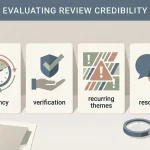
For a complaint, look for the operator’s own process and any independent route it identifies, then distinguish those from the licensing claim. The existence of a licence does not itself show that an authority will take up an individual case. Equally, a statement that games are tested or audited should identify the relevant check, rather than relying on the regulator’s name as implied proof.
Accessing Offshore Casinos as a UK Player
A casino website loading on your phone or allowing you to create an account tells you something about access, not about whether its operator is authorised to serve you. These are separate questions. A Curacao casino may be visible from a UK internet connection, but that does not make it a UK-regulated casino or establish that it can lawfully offer gambling to customers in Great Britain.
For Great Britain, the key test concerns the operator’s activity in the market, not the country where its business is based. An operator serving customers in England, Scotland or Wales needs a licence from the UK Gambling Commission, even if it operates from abroad. A Curacao licence, or a site’s willingness to accept a registration, is not a substitute for that UK licence.
This distinction matters when you encounter a site described as a Curacao casino for UK players, including one that accepts cryptocurrency. A payment option or a successful visit to the site does not change the operator’s regulatory status. Nor does a page aimed at British customers, a UK currency display or a claim that the casino accepts UK players establish approval to serve the market. Treat these as features of the site, not evidence of authorisation.
The legal position for an individual is not identical to the operator’s obligations. UK law does not expressly make it an offence for a British citizen to use gambling services licensed abroad. That does not mean that every such service is approved for Great Britain, or that using one carries the same protections as playing with a UKGC-licensed operator. The absence of a player offence should not be read as a regulator’s endorsement.
Technical access to a website (such as it loading on your phone) does not constitute regulatory authorisation to serve the UK market.
If you are assessing a Curacao online casino that appears to accept UK customers, verify what its licence does and does not cover, and whether the operator holds the relevant UKGC licence for Great Britain. Do not infer the answer from the site being reachable, from its terms mentioning the UK, or from another customer’s ability to register. If the information is unclear, you cannot safely treat access as proof that the operator is authorised.
You are responsible for checking the laws that apply where you live and understanding the implications before using an offshore gambling service. This is particularly important if you are outside Great Britain, because the legal framework may differ by jurisdiction. Availability is a technical fact about a website; permission to serve a market is a regulatory question. Keeping those two questions separate prevents a functioning page from being mistaken for legal approval.
Bonuses and Slots: Read the Terms Before You Play
A bonus is not simply extra cash added to your balance. Its usable value depends on what you must wager, which games count, which winnings remain eligible and when the offer expires. Terms can differ between Curacao casino sites, so read the rules attached to the specific promotion rather than relying on a headline or a description of another offer.
A wagering requirement is a multiplier applied to a stated amount. The terms should say whether the multiplier applies to the bonus, the deposit and bonus together, or another defined total. A specialist review has reported offshore welcome offers with requirements of 35 times or more; another reported a 40-times condition that could apply to the bonus and deposit combined, the bonus alone, or the bonus and free spins together. These are reported offer terms, not a standard that applies to every casino or a promise that a promotion is still available. The calculation base matters: the same multiplier can require different total wagering depending on what it covers.
Casinos Without a Swedish Licence: UK Rules
Free spins have their own conditions. A specialist review has reported requirements of 30 to 50 times the winnings from spins, alongside withdrawal caps from £5 to £50. Those figures describe terms reported for offers, not universal limits. Check whether the requirement applies to the winnings or another amount, and whether a cap restricts what can be withdrawn even after wagering is complete. A spin award can therefore produce winnings that are subject to both wagering and a maximum eligible amount.
The games that count also affect the calculation. If the terms restrict qualifying play to selected Curacao casino slots, or assign different contribution rules to different games, playing outside the eligible group may not advance the requirement as expected. Confirm which games qualify and how their contribution is calculated before using the bonus. Do not assume that every slot contributes in the same way merely because it appears in the casino lobby.
Expiry conditions can remove an offer or its remaining balance if you do not meet the stated requirements in time. Check when the clock starts, what must be completed before expiry, and what happens to unused spins or bonus funds. A specialist review has reported free-spin packages expiring within 24 to 72 hours; that is a reported range, not a general rule for Curacao casino bonuses.
For any offer, compare its headline value with the full conditions: calculation base, eligible games, treatment of winnings, withdrawal cap and expiry. If one of these terms is unclear, the advertised amount alone cannot tell you what you will be able to keep.
Check Bonus Terms
- Identify the wagering multiplier and its calculation base
- Verify which specific games contribute to the requirements
- Check for withdrawal caps on winnings
- Confirm the expiry timeframe for the bonus or spins
Deposits, Withdrawals and Payment Routes
A non-UK-regulated casino may accept card payments, e-wallets, bank transfers or cryptocurrency. The cashier may route a payment through an alternative processor, so the name shown during checkout may not be the casino’s own payment service. Available methods can differ between operators and may change; seeing a method mentioned elsewhere does not establish that a particular site currently accepts it.
The same caution applies to searches for casinos using Skrill, Neteller or Trustly. Check the cashier on the site itself and read the payment terms before depositing. Even if one of these services is offered for deposits, that does not establish that withdrawals can be sent through it. A casino may require a different route for payouts, or make the available route depend on the payment method used, account details or its own processing arrangements. Do not deposit on the assumption that the money will return by the same channel.
Timing claims also need to be read carefully. Descriptions of non-GamStop casino withdrawals are not consistent: one stated range is 24 hours to 5 business days, with the method affecting the timing; another account says a withdrawal can take three or four weeks. These are materially different expectations, not interchangeable ways of describing a standard payout. Treat a quoted range as an estimate rather than an enforceable deadline. For non-UK-regulated casinos, there is no regulatory clock requiring enforcement of a stated processing time.
Before paying in, look for the casino’s own withdrawal conditions: which methods are available, whether the deposit route affects payout choices, and what processing steps or limits may apply. A payment logo or a successful deposit confirms only that a payment was accepted at that point. It does not prove that a later withdrawal will use the same provider, arrive within the deposit timeframe, or be processed without delay. Keep a record of the method selected and the terms displayed when you use it; those details help you compare the casino’s actual handling with what it stated.
Anjouan Casino Licence in the UK: What It Means
Account Checks, Disputes and Player-Fund Risks
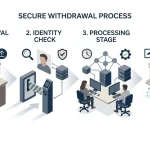
A withdrawal request can trigger account checks that were not completed when you opened the account. The operator may ask you to confirm your identity or provide further documents before releasing funds. A specialist review has also reported requests for notarised documents or video calls in some cases. Treat these as reported practices, not a standard condition for every non-UK-regulated casino; check the operator’s terms for its own verification requirements before depositing.
If a payment is delayed or refused, keep copies of the terms that applied when you accepted the offer, your account messages and any documents you submitted. Ask the operator to identify the specific requirement behind its decision and to explain what would satisfy it. This creates a clearer record if you need to pursue the matter through any complaint route available to that operator. A licence name alone does not tell you how accessible or effective that route will be.
The distinction between jurisdictions matters here. Under Anjouan’s framework, operators must respond to complaints within 30 calendar days, but a response deadline is not a guarantee that the complaint will be upheld or that funds will be recovered. Anjouan’s authority does not adjudicate player complaints, and Anjouan-licensed casinos do not provide an independent dispute process comparable to UKGC-approved alternative dispute resolution. Those are specific features of Anjouan; they should not be assumed to describe Curacao-licensed casinos.
There is a separate risk if an Anjouan-licensed operator fails. Its framework does not guarantee that player money is kept apart from company funds. In that situation, players are unsecured creditors, so they do not have guaranteed priority over other creditors when claims are handled. A casino’s claim to be licensed therefore does not, by itself, establish that your balance is protected if the business cannot pay.
For any operator, check the named jurisdiction and the terms governing verification and complaints before you play. Do not infer that Curacao has Anjouan’s rules, or that a Curacao licence alone establishes a casino’s safety, complaint protections or treatment of player funds.
Can UK players legally play at casinos licensed in Anjouan?
Yes, UK law does not explicitly prohibit you from using gambling services licensed abroad, and players do not commit a criminal offence by gambling on an unlicensed site. However, an Anjouan licence does not authorise a casino to serve customers in Great Britain; operators serving that market need a UK Gambling Commission licence.
What happens if I have a dispute with an Anjouan-licensed casino as a UK player?
You can complain to the operator, which must respond within 30 calendar days. Anjouan’s authority does not handle or decide player complaints, and these casinos are not required to offer independent dispute resolution comparable to UKGC-approved services.
Are Anjouan casinos connected to the GamStop self-exclusion scheme?
No. Anjouan-licensed casinos are not required to integrate GAMSTOP, and casinos outside the UK Gambling Commission’s system are not part of its self-exclusion scheme.
Are Anjouan-licensed casinos safe and fair?
An Anjouan licence alone does not guarantee that a casino is safe or fair. The framework does not require RNG testing, audits or segregated player funds, so you should not assume those protections are in place.
Can I complain to the Anjouan regulator if a casino won’t pay me?
No. The Anjouan authority does not handle, mediate or decide player complaints; you can complain to the operator, which must respond within 30 calendar days.
Casinos

£1 Minimum Deposit Casinos in the UK: What to Know
A £1 cashier minimum can allow a deposit, while promotion eligibility and withdrawals follow separate...

£10 Minimum Deposit Casinos in the UK: How It Works
A cashier minimum sets the entry point for funding an account; it does not determine...

£2 Minimum Deposit Casinos in the UK: What It Means
A cashier accepting £2 does not guarantee bonus eligibility or immediate access to withdrawals; those...

£20 Minimum Deposit Casinos in the UK: How They Work
A cashier minimum sets the smallest accepted deposit, while the balance remains separate from the...

£3 Minimum Deposit Casinos in the UK: Key Rules
The cashier threshold is only one rule; payment methods, bonus terms and play limits can...

£4 Minimum Deposit Casinos in the UK: Explained
A cashier minimum is only one account rule; game stakes, offer conditions and withdrawal thresholds...

£5 Minimum Deposit Casinos in the UK: How It Works
A cashier minimum sets the amount accepted for a deposit, while separate rules govern game...

Anjouan Casino Licence in the UK: What It Means
An Anjouan authorisation is separate from UKGC permission, so the licence alone does not establish...

Casino Apps in the UK: Mobile Play and Features
See how apps and browsers handle casino games, and what to consider for mobile play,...

Foreign Casinos for UK Players: Licensing and Rules
This guide explains how licensing, UK rules, GamStop, bonuses and payment checks apply to operators...

Instant Withdrawal Casinos UK: How Payouts Work
Payout speed depends on the full route from confirmed request to funds arriving, as well...

International Casinos for UK Players: What to Know
A practical guide to licensing, access, bonus terms and protections when an overseas operator accepts...

Pay by phone credit at UK mobile casinos
Pay by Phone routes a casino deposit through a participating network or payment partner, with...

Offshore Casino Sites for UK Players: Rules and Risks
The guide explains licensing, payments, identity checks and bonus terms without presenting a ranked shortlist....
Offshore casinos for UK players: what to check
A practical guide to licensing, bonus terms, crypto payments, verification and the protections lost outside...

British Casinos Outside GamStop: What to Know
GamStop covers participating UKGC-licensed operators, so its exclusion does not apply universally to every gambling...
Casino no-ID verification in the UK: how checks work
A document-free sign-up does not remove identity checks; UK-licensed casinos often verify details before the...

Casino Not on GamStop Instant Withdrawals: Key Factors
Withdrawal speed can depend on casino processing as well as the payment route and checks...

Casino sites not registered with GamStop UK: what to know
The guide explains where GamStop applies, what an overseas licence means, and which terms and...

No-ID-Verification Casino Withdrawals in the UK
Registration, identity checks and payment settlement are separate stages, so a quick deposit or payout...

Casinos Without a Swedish Licence: UK Rules
A licence from outside the UKGC does not place a casino under the Commission’s supervision,...

Casinos That Bypass GamStop: What It Means
GamStop restrictions apply within the UKGC framework, so licence status—not a casino’s label—defines the distinction....

Fast Withdrawal Casinos in the UK: What to Check
A payout is complete only when funds reach the selected account, so processing status alone...

Gibraltar Casino Licences in the UK: What to Check
A Gibraltar licence claim does not establish UKGC oversight or show which controls, payment terms...

Jackpot Mobile Casino UK: How Jackpots Work on Phones
A UK guide to how jackpot prizes are built, when they are paid, and what...

Merkur Casino Online UK: Slots and Safety Checks
A practical guide to UK-licensed Merkur slots, covering spin controls, demo access, stakes, bonuses and...

UK Online Casino Trustworthiness: Licence Checks
A UKGC register entry is one part of the picture, alongside market eligibility, payment terms,...
No Account Casino UK: How the Process Works
No-account services can simplify the entry step, but operators may still keep customer records and...

No Minimum Deposit Casinos in the UK: What £1 Means
A low cashier minimum does not automatically qualify a deposit for a promotion or make...

Non-Gamban Casinos in the UK: What the Claim Means
A claim that a casino is not blocked by Gamban does not establish endorsement, UK...

Non-GamStop Curaçao Casino Sites and UK Exclusion
The guide explains the reach of GAMSTOP and individual casino exclusions, and how to assess...

Non-GAMSTOP European Casinos: What to Know
GAMSTOP applies to participating online operators, while this guide avoids unverified lists and treats bonus...

Non-UK Licence Casinos: What the Licence Means
A licence identifies an operator’s regulator, but does not guarantee UK oversight or the same...

Non-UK-Registered Casinos: How Regulation Works
The guide separates company registration from gambling oversight and explains how payments, bonus terms and...

Non-UK-Regulated Casinos: Rules for UK Players
UKGC authorisation depends on serving customers in Great Britain, while an overseas licence does not...

Non-UKGC Licensed Casinos: Rules and Risks
The guide explains the difference between UKGC oversight and overseas licensing, including what each licence...

Malta MGA Licence and UK Online Casinos: What It Means
An MGA licence covers Malta’s regulatory system; serving customers in Great Britain requires separate UKGC...

Online casino no registration UK: browser play explained
Browser play avoids installing casino software, but it does not by itself remove account requirements...

Online Casinos With No Sister Sites in the UK
Separate ownership, platform control and licensing to assess whether two casino brands genuinely belong to...

Online Slots Not on GamStop: What It Means
GamStop status depends on whether a gambling operator is within UKGC jurisdiction, not on a...

Quick Withdrawal Casinos in the UK: Payout Timing
Payout speed depends on processing, the cashier method and whether bonus wagering or other conditions...

Safe Online Casinos in the UK: Legal Checks and Protections
A UKGC licence is the starting point, but domain, operator, payment, bonus and dispute checks...

Same-Day Payout Casinos in the UK: What to Know
A withdrawal’s arrival time depends on casino processing, the selected payment route and conditions that...

Online Casino Payouts in the UK: RTP Explained
RTP and house edge describe expected returns, while withdrawal speed concerns access to funds; neither...

Trusted Casinos Not on GamStop UK: What to Check
The guide separates operator claims from independent oversight and explains the limits of protections, reviews,...

Trusted UK Casino Checks: Licensing and Status
A practical guide to licensing, regulatory records, crypto claims, app checks, bonus terms and payment...

USA Casinos for UK Players: Legal Status and Risks
A practical guide to UKGC licensing, overseas access, payment risks, bonus terms and limits at...

VPN-Friendly Casinos in the UK: Access and Checks
A practical overview of VPN access, casino rules, location checks and payment considerations for UK...