No Account Casino UK: How the Process Works
 Available in GB

No-account services can simplify the entry step, but operators may still keep customer records and require checks later.
Table of Contents
- What “No Account” Changes—and What It Does Not
- How to Read No-Account Casino Offers Without Mistaking Them for a Site List
- The UK Rules Behind a No-Account Casino
- A Practical Guide to Checking the Sign-Up, Verification and Withdrawal Process
- Playing for Real Money on Mobile: Deposits and Withdrawals Are Separate
- What “Casino Without an Account” Means in Practice
- How to Assess a Newly Launched No-Account Casino
- No-Deposit Free Spins: Check the Live Offer and Its Conditions
- Trustly and No-Account Play: A Payment Method Is Not a Verification Shortcut
- Paysafecard and No-Account Casinos: Confirm What the Payment Flow Supports
What “No Account” Changes—and What It Does Not
“No account” describes a change to the entry step, not necessarily the absence of a relationship between you and the casino. In a conventional sign-up, you may create a username and password and complete a form before playing. A no-account service may reduce or remove that familiar sign-up sequence. The label alone does not tell you exactly what information is collected or how the operator associates your activity with you.
That distinction matters because an account can mean two different things in everyday language. It can mean the credentials you use to sign in, or it can mean the customer record an operator uses to manage play, payments and requests. A service may avoid asking you to create a conventional login while still keeping a record needed to operate the service. So “no account” should not be read as “the casino knows nothing about me” or “there can be no checks later”.
The practical change is often at the point where you begin. You may encounter fewer steps before reaching the games, or the service may present access differently from a standard username-and-password account. But the phrase does not specify which steps have been removed. It does not, by itself, tell you whether you need to provide details before playing, whether you can return using the same access route, or what happens if you switch device. Those details depend on the operator’s actual process, not on the label.
When considering no-account casino options in the UK for 2026, you may want to check how long payouts are stated to take. The entries below give you the available payout-speed information for each operator.
1. x3bet
Payout speed: 1-3 business days x3bet lists a payout speed of 1–3 business days.
2. SpinFormula
Payout speed: 1-3 business days SpinFormula lists a payout speed of 1–3 business days.
3. Zombillion
Payout speed: 1-3 business days Zombillion lists a payout speed of 1–3 business days.
4. NightLuck
Payout speed: 1-3 business days NightLuck lists a payout speed of 1–3 business days.
5. Revery Play
Payout speed: 1-3 business days Revery Play lists a payout speed of 1–3 business days.
6. BeOnBet
Payout speed: 1-3 business days BeOnBet lists a payout speed of 1–3 business days.
7. SlotoSport
Payout speed: 1-3 business days SlotoSport lists a payout speed of 1–3 business days.
8. EvoSpin
Payout speed: 1-3 business days EvoSpin lists a payout speed of 1–3 business days.
9. Amunbet
Payout speed: 1-3 business days Amunbet lists a payout speed of 1–3 business days.
10. WinBeast
Payout speed: 1-3 business days WinBeast lists a payout speed of 1–3 business days.
It is also useful to separate access from permission to withdraw. Starting a game is one event; asking the operator to release a balance is another. Identity or payment-ownership questions can arise before a withdrawal. That possibility is not disproved by a quick start, a short form or the absence of a visible account dashboard. A smooth opening screen cannot establish what information will be needed when you later want to receive funds.
This is why “online casino no account” can describe an interface or sign-in approach without making a promise about the full customer journey. If a site lets you begin without creating a familiar login, that tells you something about the first interaction. It does not settle what records are kept, what checks may occur, or whether the same method will be available for every later step. Read the wording narrowly: it concerns how access is presented unless the operator’s terms explain more.
The phrase “casino with no account” can also create an expectation that there is no persistent profile at all. That is a stronger claim than the wording can support on its own. A player may not see a conventional profile, yet the operator may still need to connect activity and requests to the correct customer. Conversely, a site that uses the word “account” may make sign-up feel brief. The label is not a reliable measure of how much information you will be asked to provide or how much control you have over the service.
Non-Gamban Casinos in the UK: What the Claim Means
Nor does “no account” mean “free”. A free online casino experience and real-money play are different things, and the access wording does not tell you which one is being offered. Check whether the games are for entertainment only or involve money before treating the experience as a way to play without financial commitment. The absence of a conventional sign-up screen does not answer that question.
The same caution applies to claims that a no-account casino is automatically better. A shorter initial step may suit you if you want to avoid creating another set of login credentials. It does not establish that the service is suitable overall. To judge that, you need to know what the operator says about access, customer information and the stages at which it may ask you to confirm details. “Best” cannot be inferred from the no-account label alone.
A useful way to interpret the term is to ask what it changes at the moment you arrive, and what it leaves unanswered. It may change the route into play; it does not necessarily remove customer records, later checks or the distinction between starting a session and completing a withdrawal. Treat the wording as a description of the sign-in experience, not as proof that the rest of the service operates without identification or verification.
Attention: A "no account" label describes the sign-in experience; it is not proof that the service operates without identification, verification, or customer records.
How to Read No-Account Casino Offers Without Mistaking Them for a Site List
A page that groups no-account casino offers is not useful simply because it contains several brand names. An offer is a set of conditions attached to a particular promotion, and those conditions can differ even when the casinos appear together on the same page. To assess what you would actually receive, separate the description of the casino from the terms of the offer.
Start by identifying the promotion itself. Is it a bonus on a deposit, a set of spins, or another incentive? Check whether the offer is open to new customers, existing customers, or a defined group. A headline may describe an incentive broadly while the terms restrict who can claim it. If the promotion is not shown in the operator’s live official terms, treat it as unconfirmed rather than as a current offer.
Read the conditions as a connected set
The headline value does not tell you how an incentive works. Look for the qualifying action, the amount or form of the reward, the games on which it can be used, and any rules governing winnings. These details affect one another. For instance, a bonus may be credited only after a qualifying deposit, while the resulting funds may be usable only on specified games. A list that omits those conditions does not let you compare the offers on equal terms.
Non-GAMSTOP European Casinos: What to Know
Check wagering requirements in the context of the bonus funds, rather than treating a multiplier as a complete description. The terms should make clear what amount the requirement applies to and which games count towards it. Do not assume that every slot or casino game contributes equally, or that a game contributes at all: the live terms should identify eligible games and contribution rules.
A specialist review reports that, from 19 January 2026, UK Gambling Commission rules cap wagering requirements on bonus funds at ten times for incentives aimed at Great Britain. Treat that as a dated regulatory point, not as a substitute for reading an operator’s terms. The promotion still needs to state how its own wagering requirement works and which games qualify.
Also check whether an incentive is confined to casino play. A single incentive cannot combine more than one gambling product type. If the wording appears to bundle casino play with another product, read the actual terms carefully rather than relying on a short promotional summary.
Compare like with like
A no-account casino bonus is not a category with one standard structure. One offer may reward a deposit; another may use a different format or have different eligibility rules. Compare the conditions, not just the labels. A claimed “best” or “exclusive” offer has little meaning without a clear basis for comparison and the full terms behind it.
For a deposit bonus, note what action triggers the reward and whether the advertised amount depends on how much you deposit. Then look for the maximum qualifying deposit, the bonus calculation, and any limit on winnings or withdrawals. Do not infer these from the headline. The operator’s official promotion terms should disclose the relevant conditions, including the maximum win cap and wagering terms within one click of the bonus offer.
Do
- Separate the casino description from the offer terms
- Check wagering requirements in the live official terms
- Identify eligible games and contribution rules
Don’t
- Rely on headline values to understand how incentives work
- Assume every slot game contributes equally to wagering
- Use promotional summaries as a substitute for official terms
If the offer mentions slots, check whether the terms name eligible games and explain how play on them counts. “Slots included” does not necessarily mean every slot is eligible or that each contributes in the same way. The same principle applies to any named game category: the promotional label is not a contribution rule.
Treat labels as clues, not proof
A list may describe itself as covering sister sites, Bitcoin casinos, or casinos with a shared bonus. Those labels do not establish that the sites have identical promotions. Even where brands are presented as related, assess each offer on its own: confirm the operator’s current terms, the eligible customer group, and the specific reward being advertised. A shared label cannot replace the terms attached to the individual promotion.
Likewise, a list of sites is only a starting point for checking offers, not evidence that every entry has a live promotion or that the same bonus is available at each one. A useful comparison should let you trace each claim to the relevant official promotion and show the conditions beside it. If a page supplies only a brand name and a headline, you do not yet have enough information to judge the offer.
Casinos in the UK: Deposits, Licensing and Access
Keep the decision narrow: establish what the promotion provides, what you must do to qualify, and what restrictions apply to using or withdrawing the reward. That gives you a basis for comparing offers without mistaking a directory of casinos for a verified list of current bonuses.
The UK Rules Behind a No-Account Casino
The phrase “no-account casino” describes a way of accessing a gambling service; it does not create a separate regulatory category. A remote casino offering gambling to consumers in Great Britain falls within the UK Gambling Commission’s remit even if its key equipment is located elsewhere. The location of servers or other core equipment does not, by itself, remove the requirement for the relevant Commission licence.
The Commission oversees commercial gambling in Great Britain and is the sole regulator for that activity there. Its remit includes online casino gambling. The distinction between Great Britain and the United Kingdom matters: the Commission’s stated responsibility for remote gambling applies to services offered to consumers in Great Britain, while the UK-wide description of gambling regulation should not be read as meaning that every part of the country has an identical legal framework.
Non-GamStop Curaçao Casino Sites and UK Exclusion
For a business, the relevant question is not whether its website uses a conventional registration form. It is whether the operator has the appropriate Gambling Commission operating licence for the gambling activity it offers to consumers in Great Britain. A different sign-in process, an app rather than a browser, or a brand’s use of “no account” in its wording does not change that basic requirement.
Business licences and personal licences
The Commission issues licences at two different levels. An operating licence is granted to a business, while a personal licence is granted to an individual involved in operating gambling in Great Britain. These are not interchangeable credentials. A person’s licence does not replace the business’s operating licence, and a business licence is not the same thing as a personal licence held by an individual.
This distinction helps clarify what a licence claim refers to. If a casino presents itself as authorised, the claim should concern the operator and the relevant gambling activity, rather than simply the name of a person associated with the business. The fact that an individual holds a personal licence would not, on its own, establish that the website’s business has the operating permission needed to serve Great Britain.
Licensing Distinction
An operating licence is granted to the business, whereas a personal licence is granted to an individual; the latter does not replace the business’s operating licence.
Conversely, the operating licence belongs to the business, not to every customer-facing label it may use. A website name, app name or promotional brand is not itself proof that the business behind it holds the required permission. The name visible to a player and the licensed entity may not be expressed in the same way, so the important issue is whether the operator responsible for the service is authorised for the activity it provides.
Why location does not settle the question
Remote gambling can be delivered across borders: a business may use equipment situated outside Great Britain while offering its service to people within it. The Commission’s licensing requirement follows the market being served, not merely the physical location of the equipment. An operator cannot treat overseas hosting as a substitute for the permission required to serve Great Britain consumers.
This is why a “no account” label should not be treated as evidence of a special exemption. Whether a service asks you to create a conventional profile is separate from whether the business is subject to the applicable licensing framework. The access method does not determine the regulator, and it does not convert an unlicensed service into a licensed one.
The UK Gambling Commission’s role also should not be confused with the operator’s own terms or customer-support process. A company may describe its service in a particular way, but its description does not decide whether the relevant licence is required. That question turns on the activity offered and the consumers to whom it is offered.
Non-UKGC Licensed Casinos: Rules and Risks
When you assess a service described as a no-account casino, keep the regulatory question at the business level: identify which company operates the gambling service and whether it holds the relevant operating licence for Great Britain. The Commission’s framework also recognises personal licences for individuals involved in operating gambling, but those do not substitute for the business permission. This is the core distinction behind the licensing structure; the wording used to describe registration or access does not alter it.
A Practical Guide to Checking the Sign-Up, Verification and Withdrawal Process
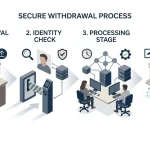
A casino described as needing no account may still ask you to provide details or complete checks at points in the player journey. The useful question is not simply whether a sign-up form appears first. It is what information the operator requests, when it requests it, and whether you can understand the steps required before you try to withdraw.
Before you deposit
Start with the registration screen. Check whether you are asked to create a username and password, enter personal details, or confirm information through another route. A shorter sign-up flow does not tell you what checks may follow, so do not treat the absence of a conventional form as proof that verification is unnecessary.
For a UKGC-licensed casino, age and identity verification are required. The operator must verify your age before allowing you to deposit. You may therefore encounter a check during sign-up or before the first deposit, even if the initial process appeared minimal. Read the instructions on screen and make sure you understand which details must match your identity.
Verification and Limits
- Verify that registration details match your identity
- Confirm you understand which details are required for age verification
- Set a financial limit before making your first deposit
Before funding play, look for the operator’s explanation of account controls as well. Remote operators must prompt new customers to set a financial limit before their first deposit and provide accessible account-level limit controls. This is part of the early customer journey, not a withdrawal feature. If the prompt appears, decide on a limit before proceeding rather than treating it as a step to bypass.
During play and when details are requested
Keep the information you provide consistent. If a later check asks you to confirm details, compare the request with what you entered earlier and follow the operator’s stated instructions. A mismatch can lead to questions or a pause while information is reviewed; do not assume that a quick initial registration means later checks will be skipped.
Identity or payment-ownership questions can arise before a withdrawal. This is the point at which a player may discover that the operator needs to establish who is requesting the money or whether the payment arrangement is associated with that player. The timing can vary, so a pending balance should not be treated as proof that every step is complete.
No-ID-Verification Casino Withdrawals in the UK
If the operator requests additional information, read the request carefully before responding. Check what it asks you to confirm, how to submit the requested material through the operator’s process, and whether the withdrawal status changes after submission. Avoid sending sensitive information through an unverified channel or relying on an informal message that does not explain the request.
Before requesting a withdrawal
Review the cashier and account pages before you start playing, where available. Look for the stated withdrawal procedure, any identity-check guidance, and the way the operator communicates a request for further information. The aim is to understand the sequence: a request is submitted, the operator may check identity or payment ownership, and the withdrawal can proceed only after the required steps are addressed.
When you are ready to withdraw, enter the requested details carefully and keep a record of the status shown in your account. If the operator asks a question, respond to that specific question rather than submitting unrelated information. If the status is unclear, use the operator’s official support route and ask what remains outstanding. Do not assume that a delay means a payment has been refused, or that a submitted document means the review is finished.
Same-Day Payout Casinos in the UK: What to Know
A useful no-account casino review should make this process understandable, not merely describe the first screen. When comparing reviews or following a guide, look for a clear account of when registration details are collected, when identity checks may occur, and what can prompt a payment-ownership question before withdrawal. Treat vague assurances about effortless cash-outs cautiously: the relevant test is whether the operator explains the steps you may need to complete.
Playing for Real Money on Mobile: Deposits and Withdrawals Are Separate
A mobile casino deposit and a cash withdrawal are two different payment journeys. The first moves money from you to the gambling account; the second moves withdrawable funds from that account back to you. A method that supports the first journey does not automatically support the second.
Pay by mobile illustrates the distinction. It charges a payment to your phone bill or mobile balance, so it can fund a deposit without supplying a way to receive money. Withdrawals cannot be returned to a phone bill. If you use pay by mobile to play for real money, check which withdrawal methods the operator supports before depositing. A balance on screen is not the same as cash already received.
Attention: Payment methods like "pay by mobile" may support deposits but cannot be used for withdrawals, which must be processed through other regulated routes.
For UKGC-licensed sites, withdrawals must be processed through another route, such as a bank transfer, debit card or regulated e-wallet. The available choices depend on the operator and the account; do not assume that the method you used to deposit will appear as an option for cashing out. Check the cashier’s withdrawal options and any instructions attached to them.
This matters on a phone because the payment interface can make the deposit step look like the whole transaction. It is not. Before paying, identify the route for withdrawals, whether you can use it, and what details you may need to provide. A payment method may also have transaction or account limits, so check its terms rather than treating a displayed deposit button as evidence that every part of the flow is supported.
A specialist review reports a £240 monthly ceiling for carrier billing. Treat that figure as a reported limit, not as a promise that every mobile network, payment provider or casino applies the same conditions. Your own available amount can depend on the service involved. A spending ceiling is also not a recommended budget: set a personal limit that you can afford, and stop when you reach it.
In practical terms, compare the two directions separately: how you can put funds in, and how you can take funds out. If the cashier supports a mobile deposit but offers no withdrawal route you can use, the payment method may not suit you. This remains true whether the casino uses a conventional sign-up flow or describes itself as a no-account casino on mobile. The label does not turn a deposit channel into a cash-out channel.
Online casino no registration UK: browser play explained
What “Casino Without an Account” Means in Practice
“Without an account” is best read as a description of the sign-up experience, not a promise that the operator knows nothing about you or will never ask for information. It may mean you can begin without completing a conventional form or choosing a username and password. The phrase does not, by itself, explain what records the operator creates behind the scenes or what information it may require later.
An account is more than a visible login. For play involving money, the operator needs to associate activity with a customer so it can manage the balance, apply relevant controls and handle payments. A service may create or maintain that customer record as part of its process even if you never see a standard registration screen. So a short entry route and the absence of an account in the technical sense are not necessarily the same thing.
The practical distinction is between fewer sign-up steps and fewer obligations. Skipping a conventional form does not remove the operator’s responsibility to establish who is using the service. A UKGC-licensed casino must verify a player’s age and identity, and must do so before allowing a deposit. That requirement does not disappear because the site describes its entry method as account-free.
You may also be asked to clarify identity or payment ownership before a withdrawal. That can happen after you have already played, so the first screen is not a reliable guide to everything required to access money later. The request is not evidence that the original wording meant withdrawals would be unconditional; it shows why the wording needs to be understood narrowly.
Practical Meaning of No-Account
- It describes a shorter sign-up process, not anonymous gambling
- UKGC-licensed sites must still verify age and identity before deposits
- Identity or payment-ownership checks often occur before withdrawals
- The sign-in method does not remove the operator’s regulatory obligations
When assessing a casino described as operating without an account, look for the actual steps: what details are requested at entry, how the service links activity to you, and what checks may apply when you use or withdraw funds. Treat “without an account” as shorthand for a potentially different route into play, not as proof of anonymous gambling, exemption from age and identity checks, or guaranteed access to winnings without further questions.
How to Assess a Newly Launched No-Account Casino
A new name or recently registered domain tells you when a brand appeared, not whether it is authorised to offer gambling to you. The “no-account” label does not change that distinction. Before treating a site as a real-money option, identify the business behind it and establish whether the operator holds the relevant Gambling Commission licence for serving consumers in Great Britain.
A useful check is whether the operator’s identity on the site can be matched to an entry in the UK Gambling Commission’s public register. Do not rely on a logo, a claim of being regulated, or a familiar-sounding brand in isolation. The name presented to players and the business responsible for the service may not be identical, so compare the site’s stated operator details with the register rather than searching only for its marketing name.
Non-UK-Regulated Casinos: Rules for UK Players
There is a specific caution concerning LuckyPays. A specialist review reports that the Commission’s public register dated 26 September 2026 did not show an entry under the LuckyPays brand or its stated domain, luckypays.io. That is a dated report of what the register showed; it should not be treated as a general finding about newly launched casinos or as a live confirmation of the position today. If you are considering a site, check the current register and the operator details it gives you.
If you cannot establish which business operates the site, or cannot match that business to the relevant register entry, do not treat the brand’s age or presentation as evidence of authorisation. A new casino can have a polished interface and still leave the central question unanswered: which operator is responsible for offering gambling to Great Britain consumers, and does that operator hold the required licence? A clear answer matters more than the word “new” in the name or the absence of a conventional sign-up step.
No-Deposit Free Spins: Check the Live Offer and Its Conditions
A no-deposit free-spin offer can sound simple: spins are credited without a qualifying deposit, then used on specified games. In practice, the offer’s value depends on the live terms, not just the number displayed. A specialist review describes these offers as providing 10–30 spins on nominated slots, but that range is not a promise about what any operator currently offers.
Treat an offer as current only when it appears in the casino’s official promotion terms. A search result, old review or promotional banner may remain visible after the terms have changed or the offer has ended. Check that the promotion is available to you and read the conditions attached to the spins before taking part.
Checking Free Spin Conditions
You should identify which slots qualify, check the expiration date of the spins, and determine if winnings must meet wagering conditions or are subject to a maximum win cap.
The terms should identify which slots qualify, when the spins expire and how any winnings from them are treated. They should also explain whether winnings can be withdrawn directly or must meet wagering conditions first, and whether a maximum win applies. These details affect what the free spins can produce and what you may do with any resulting balance. The maximum win cap and wagering terms must be visible within one click of the bonus offer.
For an offer described as no-account casino free spins, do not infer from the wording that the promotion bypasses the casino’s normal requirements. It describes the promotion, not necessarily the steps required to claim it or use its winnings. Confirm the live terms and any claim instructions on the operator’s own site; if the promotion or its conditions are not shown there, do not treat an old description as evidence that it is still available.
No Minimum Deposit Casinos in the UK: What £1 Means
Trustly and No-Account Play: A Payment Method Is Not a Verification Shortcut
A casino may present Trustly as a way to make a payment without a conventional sign-up process. That describes a payment route, not a promise that you can play anonymously or withdraw without checks. The method used to move money does not, by itself, settle every question an operator may need to resolve about the customer or the source and ownership of funds.
Before approving a withdrawal, an operator may ask you to confirm your identity or show that the payment method belongs to you. These questions can arise even if the initial payment appeared straightforward. If the details associated with a payment do not match the information supplied to the casino, the operator may need clarification before releasing funds. The label “no account” does not remove that possibility.
It is also important to distinguish the payment used to fund play from the route used to receive winnings. A Trustly deposit does not establish that Trustly will be available for withdrawals at that casino. UKGC-licensed sites must process withdrawals through an alternative method, such as a bank transfer, debit card or regulated e-wallet. The available route depends on the operator’s process, so check its withdrawal information rather than inferring it from the deposit screen.
Non-UK Licence Casinos: What the Licence Means
Treat Trustly as one part of the payment flow, not as proof that registration or verification has been bypassed. Before depositing, read how the casino handles identity checks, payment ownership and withdrawals. That gives you a clearer picture of what may be required if you later ask to cash out, without assuming that the same method will handle both directions of payment.
Paysafecard and No-Account Casinos: Confirm What the Payment Flow Supports
Seeing Paysafecard in a casino’s deposit options would tell you only that the operator accepts it for funding, not that it can return winnings through the same route. Deposit and withdrawal arrangements are separate, so check each one before choosing how to pay.
This distinction matters when a casino describes itself as “no account”. That label concerns how you access play; it does not confirm which payment methods the operator supports or how withdrawals are handled. Nor does a payment logo on a general information page prove that the method is available for your account or transaction.
Non-UK-Registered Casinos: How Regulation Works
Before depositing, look for the operator’s current cashier information and withdrawal terms. Confirm whether Paysafecard is listed for deposits, whether withdrawals use a different method, and what steps are required to receive funds. For UKGC-licensed sites, withdrawals must be processed through an alternative route, such as a bank transfer, debit card or regulated e-wallet. The operator’s terms should make clear which route applies.
Do not assume that a Paysafecard deposit can be reversed to a voucher or redeemed through the casino. If the cashier does not explain the withdrawal route, ask the operator before sending money. Also check that any alternative method is available to you and that its account details match the requirements stated by the operator.
The useful question is therefore not simply whether a no-account casino accepts Paysafecard. It is whether the full payment flow—from deposit to withdrawal—is clear before you commit funds.
Do all games count toward bonus wagering?
No, games may contribute differently or not count at all. Check the promotion’s terms for the eligible games and how they contribute.
Is LuckyPays licensed by the UK Gambling Commission?
The UK Gambling Commission’s public register dated 26 September 2026 does not list LuckyPays or luckypays.io. Remote operators serving consumers in Great Britain need the relevant Commission licence.
Can you withdraw to your phone bill when paying by mobile?
No, pay-by-mobile is for deposits only; withdrawals cannot be sent to your phone bill. UKGC-licensed sites must use another withdrawal method, such as a bank transfer, debit card or regulated e-wallet.
What is the maximum wagering requirement in Great Britain?
For bonus funds, the maximum is 10 times under UKGC rules effective from 19 January 2026.
Casinos

£1 Minimum Deposit Casinos in the UK: What to Know
A £1 cashier minimum can allow a deposit, while promotion eligibility and withdrawals follow separate...

£10 Minimum Deposit Casinos in the UK: How It Works
A cashier minimum sets the entry point for funding an account; it does not determine...

£2 Minimum Deposit Casinos in the UK: What It Means
A cashier accepting £2 does not guarantee bonus eligibility or immediate access to withdrawals; those...

£20 Minimum Deposit Casinos in the UK: How They Work
A cashier minimum sets the smallest accepted deposit, while the balance remains separate from the...

£3 Minimum Deposit Casinos in the UK: Key Rules
The cashier threshold is only one rule; payment methods, bonus terms and play limits can...

£4 Minimum Deposit Casinos in the UK: Explained
A cashier minimum is only one account rule; game stakes, offer conditions and withdrawal thresholds...

£5 Minimum Deposit Casinos in the UK: How It Works
A cashier minimum sets the amount accepted for a deposit, while separate rules govern game...

Anjouan Casino Licence in the UK: What It Means
An Anjouan authorisation is separate from UKGC permission, so the licence alone does not establish...

Casino Apps in the UK: Mobile Play and Features
See how apps and browsers handle casino games, and what to consider for mobile play,...

Foreign Casinos for UK Players: Licensing and Rules
This guide explains how licensing, UK rules, GamStop, bonuses and payment checks apply to operators...

Instant Withdrawal Casinos UK: How Payouts Work
Payout speed depends on the full route from confirmed request to funds arriving, as well...

International Casinos for UK Players: What to Know
A practical guide to licensing, access, bonus terms and protections when an overseas operator accepts...

Pay by phone credit at UK mobile casinos
Pay by Phone routes a casino deposit through a participating network or payment partner, with...

Offshore Casino Sites for UK Players: Rules and Risks
The guide explains licensing, payments, identity checks and bonus terms without presenting a ranked shortlist....

Offshore casinos for UK players: what to check
A practical guide to licensing, bonus terms, crypto payments, verification and the protections lost outside...

British Casinos Outside GamStop: What to Know
GamStop covers participating UKGC-licensed operators, so its exclusion does not apply universally to every gambling...

Casino no-ID verification in the UK: how checks work
A document-free sign-up does not remove identity checks; UK-licensed casinos often verify details before the...

Casino Not on GamStop Instant Withdrawals: Key Factors
Withdrawal speed can depend on casino processing as well as the payment route and checks...

Casino sites not registered with GamStop UK: what to know
The guide explains where GamStop applies, what an overseas licence means, and which terms and...

No-ID-Verification Casino Withdrawals in the UK
Registration, identity checks and payment settlement are separate stages, so a quick deposit or payout...

Casinos Without a Swedish Licence: UK Rules
A licence from outside the UKGC does not place a casino under the Commission’s supervision,...

Casinos That Bypass GamStop: What It Means
GamStop restrictions apply within the UKGC framework, so licence status—not a casino’s label—defines the distinction....

Curacao Casino Licence UK: What Players Should Know
A Curacao licence identifies a licensing jurisdiction, but does not establish that an operator is...

Fast Withdrawal Casinos in the UK: What to Check
A payout is complete only when funds reach the selected account, so processing status alone...

Gibraltar Casino Licences in the UK: What to Check
A Gibraltar licence claim does not establish UKGC oversight or show which controls, payment terms...

Jackpot Mobile Casino UK: How Jackpots Work on Phones
A UK guide to how jackpot prizes are built, when they are paid, and what...

Merkur Casino Online UK: Slots and Safety Checks
A practical guide to UK-licensed Merkur slots, covering spin controls, demo access, stakes, bonuses and...

UK Online Casino Trustworthiness: Licence Checks
A UKGC register entry is one part of the picture, alongside market eligibility, payment terms,...

No Minimum Deposit Casinos in the UK: What £1 Means
A low cashier minimum does not automatically qualify a deposit for a promotion or make...

Non-Gamban Casinos in the UK: What the Claim Means
A claim that a casino is not blocked by Gamban does not establish endorsement, UK...

Non-GamStop Curaçao Casino Sites and UK Exclusion
The guide explains the reach of GAMSTOP and individual casino exclusions, and how to assess...

Non-GAMSTOP European Casinos: What to Know
GAMSTOP applies to participating online operators, while this guide avoids unverified lists and treats bonus...

Non-UK Licence Casinos: What the Licence Means
A licence identifies an operator’s regulator, but does not guarantee UK oversight or the same...

Non-UK-Registered Casinos: How Regulation Works
The guide separates company registration from gambling oversight and explains how payments, bonus terms and...

Non-UK-Regulated Casinos: Rules for UK Players
UKGC authorisation depends on serving customers in Great Britain, while an overseas licence does not...

Non-UKGC Licensed Casinos: Rules and Risks
The guide explains the difference between UKGC oversight and overseas licensing, including what each licence...

Malta MGA Licence and UK Online Casinos: What It Means
An MGA licence covers Malta’s regulatory system; serving customers in Great Britain requires separate UKGC...

Online casino no registration UK: browser play explained
Browser play avoids installing casino software, but it does not by itself remove account requirements...

Online Casinos With No Sister Sites in the UK
Separate ownership, platform control and licensing to assess whether two casino brands genuinely belong to...

Online Slots Not on GamStop: What It Means
GamStop status depends on whether a gambling operator is within UKGC jurisdiction, not on a...

Quick Withdrawal Casinos in the UK: Payout Timing
Payout speed depends on processing, the cashier method and whether bonus wagering or other conditions...

Safe Online Casinos in the UK: Legal Checks and Protections
A UKGC licence is the starting point, but domain, operator, payment, bonus and dispute checks...

Same-Day Payout Casinos in the UK: What to Know
A withdrawal’s arrival time depends on casino processing, the selected payment route and conditions that...

Online Casino Payouts in the UK: RTP Explained
RTP and house edge describe expected returns, while withdrawal speed concerns access to funds; neither...

Trusted Casinos Not on GamStop UK: What to Check
The guide separates operator claims from independent oversight and explains the limits of protections, reviews,...

Trusted UK Casino Checks: Licensing and Status
A practical guide to licensing, regulatory records, crypto claims, app checks, bonus terms and payment...

USA Casinos for UK Players: Legal Status and Risks
A practical guide to UKGC licensing, overseas access, payment risks, bonus terms and limits at...

VPN-Friendly Casinos in the UK: Access and Checks
A practical overview of VPN access, casino rules, location checks and payment considerations for UK...