Foreign Casinos for UK Players: Licensing and Rules
 Available in GB

This guide explains how licensing, UK rules, GamStop, bonuses and payment checks apply to operators serving British players.
Table of Contents
- What “Foreign Casino” Means in the UK
- When a Casino Accepts Players from the UK
- How Offshore Licensing and Site Security Differ
- What UK Law Says About Playing at a Foreign Casino
- How Foreign Casino Bonuses Work in Practice
- What GamStop Exclusion Does—and Does Not—Cover
- How Payments and Withdrawals Work at Overseas Sites
- Follow the Money: A Casino’s Commercial Relationships
- What to Expect When You Open an Overseas Casino Account
- Limits and Verification Before You Deposit or Withdraw
What “Foreign Casino” Means in the UK
In the British gambling market, a “foreign casino” is not defined simply by where a website is based. The important distinction is its licence: the term describes an online gambling operator that accepts customers from Britain but does not hold a licence from the UK Gambling Commission (UKGC). Such operators may hold a licence issued elsewhere, but that does not make them UK-licensed.
This separates two ideas that are easy to conflate. An operator’s legal authority to offer gambling services in Britain is one matter; an individual player’s position when placing a bet is another. The rules governing the operator do not automatically make the player’s action a criminal offence.
The licence, not the website address
A casino can have a British-facing website, use English and show prices in pounds without being authorised by the UKGC. Those features describe how the site presents itself; they do not establish which regulator oversees it. Nor does the operator’s registered office alone determine whether it is a foreign casino in this sense. The relevant question is whether it holds the British operating licence required to serve customers in the market.
Choosing a foreign casino as a UK player means checking the practical details before you decide where to play. Use this list as a starting point and consider whether each operator’s stated payout timeframe suits you.
1. x3bet
Payout speed: 1-3 business days x3bet lists a payout timeframe of 1–3 business days. Check whether that timeframe works for you.
2. SpinFormula
Payout speed: 1-3 business days SpinFormula lists a payout timeframe of 1–3 business days. Check whether that timeframe works for you.
3. Zombillion
Payout speed: 1-3 business days Zombillion lists a payout timeframe of 1–3 business days. Check whether that timeframe works for you.
4. NightLuck
Payout speed: 1-3 business days NightLuck lists a payout timeframe of 1–3 business days. Check whether that timeframe works for you.
5. Revery Play
Payout speed: 1-3 business days Revery Play lists a payout timeframe of 1–3 business days. Check whether that timeframe works for you.
6. BeOnBet
Payout speed: 1-3 business days BeOnBet lists a payout timeframe of 1–3 business days. Check whether that timeframe works for you.
7. SlotoSport
Payout speed: 1-3 business days SlotoSport lists a payout timeframe of 1–3 business days. Check whether that timeframe works for you.
8. EvoSpin
Payout speed: 1-3 business days EvoSpin lists a payout timeframe of 1–3 business days. Check whether that timeframe works for you.
9. Amunbet
Payout speed: 1-3 business days Amunbet lists a payout timeframe of 1–3 business days. Check whether that timeframe works for you.
10. WinBeast
Payout speed: 1-3 business days WinBeast lists a payout timeframe of 1–3 business days. Check whether that timeframe works for you.
An operator licensed outside the UK sits outside the UKGC’s regulatory system. Its offshore licence is issued under another jurisdiction’s rules, not as a substitute UKGC licence. A visitor may therefore see a site that looks familiar while the legal relationship behind it is different: the operator answers to an overseas regulator rather than the British gambling regulator.
That distinction also prevents a common misunderstanding about the word “licensed”. It can describe permission granted by an overseas authority, but it does not mean permission to operate in Britain. The licence’s issuing authority matters. A foreign licence and a UKGC licence are separate authorisations, and holding the first does not amount to holding the second.
The operator’s position
For online gambling services offered to customers in England, Scotland and Wales, the operator must hold a UKGC licence. Without one, offering those services is illegal. The rule concerns the business activity: the operator’s provision of gambling to people in the relevant part of the British market.
This is why “foreign” and “legal to operate here” are not interchangeable descriptions. A company may be established abroad and hold a valid offshore licence, yet still lack the authority required to offer its services in Britain. Conversely, the fact that a site is accessible or has a polished British-language interface does not itself answer whether the operator is authorised.
The UKGC licence is the marker of regulation by the British regulator. If an online casino does not hold that licence, it is not a UKGC-regulated casino, even if it presents itself as an option for British customers. Describing such a site as a foreign casino identifies its regulatory status in relation to Britain; it does not certify the quality or scope of its overseas licence.
Non-UK-Regulated Casinos: Rules for UK Players
The player’s position
The operator’s lack of a UKGC licence does not, by itself, make a British individual’s act of betting with an overseas casino illegal. There is no UK law prohibiting an individual from placing bets with an operator licensed outside the country. That is a different legal question from whether the operator is permitted to provide gambling services to British customers.
The distinction can be stated plainly: the licensing obligation applies to the operator offering the service, while the player is not made criminally liable simply for placing a bet with a foreign operator. It would therefore be inaccurate to treat “unlicensed for the British market” as meaning that the customer has committed an offence by playing.
This does not turn an offshore casino into a UK-licensed service. The player’s position and the operator’s position remain separate. A British customer may not be committing a crime by betting, while the operator may still be acting unlawfully by offering services in England, Scotland or Wales without the required UKGC licence. Neither point changes the other.
While you may not be committing a crime by betting with a foreign operator, this does not mean the operator is authorised to serve the British market or that you are protected by the UKGC.
A practical definition
When you see “foreign casino” or “offshore casino” used in relation to British players, read it as a description of the operator’s regulatory relationship with the UK. It means the business accepts British customers but is licensed outside the UK and is not regulated by the UKGC. It does not mean merely that the company has an overseas address, and it does not mean that an overseas licence grants permission to operate in Britain.
The term is also not a statement about the player’s criminal liability. A foreign operator’s lack of a UKGC licence concerns the operator’s authority to serve the market; it does not create a general prohibition on an individual British player placing a bet overseas. Keeping those two questions separate makes the terminology clearer: one is about who regulates the casino, and the other is about the legal position of the person using it.
When a Casino Accepts Players from the UK
A foreign casino’s website opening on your device does not show that the operator is permitted to serve customers in Britain. It shows only that your connection has reached the site. Access and authorisation are separate: a site can accept a registration or deposit while still lacking the licence required to provide gambling facilities to customers in England, Scotland and Wales.
The distinction matters because the rule applies to the operator, not just to the website’s location. An online gambling business selling into the British market must hold a Gambling Commission licence, even if it is based overseas. Without that licence, providing gambling facilities to UK customers is illegal. Advertising an unlicensed service in the UK is also illegal. A casino’s willingness to take your custom therefore does not establish permission to operate or promote its services here.
USA Casinos for UK Players: Legal Status and Risks
Why a site may still be reachable
A site can attempt to identify visitors by their internet connection and block access from places where it is not authorised to operate. That block depends on the operator applying it effectively. If it does not, a British visitor may be able to load the site and proceed through its pages. Gambling.com has reported that some non-UK-licensed casinos that are supposed to block British visitors do not enforce the restriction. The report also says a basic VPN can bypass such a block by making a connection appear to come from elsewhere.
That account describes a reported practice, not a guarantee that a particular site will accept you. Operators can change their access controls, and a site that loads today may reject a visitor later or stop a registration during account checks. A VPN changing how a connection appears does not change the operator’s licence status or make it authorised to serve the British market. Nor does a successful sign-up prove that the operator will honour every later transaction.
The same distinction applies when a website uses language such as “UK players accepted”. That statement describes the site’s claimed willingness to take customers; it is not evidence of a UK Gambling Commission licence. A foreign casino may display a registration form, list Britain as an available country or allow you to browse games. None of those actions grants the operator permission to provide gambling facilities in Britain.
Financial Risk
Using unlicensed sites may leave you without legal recourse if an operator refuses to pay your winnings, as the UKGC’s enforcement framework does not apply.
The practical risk of being accepted
The key risk is that you may be able to put money into an account without having the protections associated with a UK-licensed operator. Offshore casinos are not regulated by the UK Gambling Commission, and they do not provide UKGC-mandated affordability checks. If a disagreement develops, you cannot assume that the UKGC’s complaint and enforcement framework applies to that operator.
A report by gambling.com describes cases in which unlicensed sites refused to pay customers’ winnings, leaving those customers without legal recourse. This is a reported risk, not a statement that every foreign casino will withhold a payout. The practical point is narrower: if an operator refuses to pay, the fact that its site accepted a British customer does not itself create a UKGC route for resolving the dispute. The operator’s own acceptance of your account should not be mistaken for an independent guarantee that a complaint can be enforced in Britain.
Before treating a site as available to you, separate three questions. Can you reach its pages? Will it allow you to register and transact? Is it authorised to serve customers in Britain? A positive answer to either of the first two does not answer the third. The decisive issue for lawful service in Great Britain is whether the operator holds the relevant UK Gambling Commission licence, not whether its website is technically accessible or whether it describes itself as open to British players.
This is why lists of foreign casinos accepting UK players can be misleading if they treat access as a sign of legitimacy. A site may appear to accept British visitors because its restriction is not enforced, because a visitor uses a VPN, or because the operator’s registration flow does not stop the account at the outset. Those are different mechanisms, but none changes the legal boundary for the operator. If a site without the required licence offers gambling to UK customers, its ability to do so online does not make that service authorised.
Casino Apps in the UK: Mobile Play and Features
How Offshore Licensing and Site Security Differ
A licence and a security feature answer different questions. A licence identifies the authority overseeing an operator and the rules that authority applies. Encryption is a technical measure intended to protect information as it moves between your device and a site. Neither one, by itself, establishes the other: an encrypted connection does not prove that a casino is properly licensed, and a licence does not tell you exactly how the site protects every piece of data.
Offshore casinos are not regulated by the UK Gambling Commission (UKGC). A licence from an authority outside the UK therefore does not place an operator inside the UKGC’s regulatory system or give you UKGC oversight. Some offshore operators do hold licences from other authorities. A specialist review has described some such authorities as reputable, but that description is not a substitute for checking which authority issued a particular licence and what its oversight covers.
The distinction matters because a licence is not a universal certificate of player protection. Its significance depends on the issuing authority’s rules and enforcement. A casino displaying a licence claim is making a statement about its regulatory status; the claim alone does not establish how closely the operator is supervised, how complaints are handled, or what remedies are available if a dispute arises. Nor should an offshore licence be read as evidence that the operator meets UKGC requirements. The UKGC does not regulate these operators.
Affordability checks illustrate a specific difference. UKGC-mandated affordability checks do not apply to offshore operators as UKGC rules, because those operators sit outside the Commission’s regulatory remit. That does not show that an offshore site has no controls of its own; it means you cannot assume that the UKGC requires it to apply the same affordability safeguards as a UKGC-licensed operator. A site’s own policy, if it describes one, is separate from a UKGC obligation.
Gibraltar Casino Licences in the UK: What to Check
The same care is needed with security language. Non-GamStop casinos are reported to use measures such as advanced encryption to protect account and financial information. Encryption can help prevent data from being read in transit by an unauthorised party. It does not verify that the business handling the information is trustworthy, that every internal system is secure, or that the operator will resolve a complaint fairly. “Secure” can refer to a technical connection, while licensing and consumer oversight concern different parts of the relationship.
Before relying on a security statement, identify what it actually describes. A claim about encrypted data is narrower than a claim about how an operator stores records, restricts staff access, responds to a breach, or handles account disputes. Those matters cannot be inferred from the word “encryption”. Likewise, a licence badge does not independently confirm that every security claim on the site has been assessed by the licensing authority. Treat each claim according to its scope rather than combining them into a general assurance.
A specialist review has also reported that many non-GamStop platforms are licensed and regulated by authorities outside the UK. This is a report about the sector, not a guarantee that every site has a licence or that every licence provides equivalent oversight. If you are assessing a particular overseas casino, the relevant distinction is between a verifiable licence issued by a named authority and a general statement that a site is “licensed”. The latter does not tell you who is responsible for supervision.
Operator policies can also differ in practical ways. A specialist review notes considerable variation between sites in withdrawal limits, pending periods and verification procedures. Those differences are not evidence of a particular regulator’s standards, but they do show why one site’s terms cannot safely be assumed to apply to another. Read the operator’s own rules for the account and transaction in question; do not treat a general security claim as a substitute for those terms.
International Casinos for UK Players: What to Know
For foreign casino sites, then, the useful test is not whether a page uses reassuring labels. Separate the operator’s licensing authority from its technical security claims, and distinguish both from protections imposed by the UKGC. Offshore operators are outside that Commission’s oversight and do not provide UKGC-mandated affordability checks. A claimed licence or encryption measure may describe a particular feature, but neither makes an offshore site equivalent to a UKGC-regulated casino.
What UK Law Says About Playing at a Foreign Casino
For an individual in the UK, the legal position is different from the position of a casino operator. The Gambling Act 2005 does not make it a criminal offence for a UK resident to place a bet with a foreign casino. There is no criminal penalty for the player simply because the operator is based overseas or lacks a UK Gambling Commission licence.
That distinction matters: the absence of a penalty for you does not mean that an overseas casino is authorised to serve customers in Britain. Nor does it mean that the site is treated as a UK-licensed casino. The law can place obligations on an operator without making the customer’s act of gambling a criminal offence. These are separate questions, and confusing them can make the legal position seem broader than it is.
What the absence of a player offence means
If you have used a foreign casino, the fact that it does not hold a UKGC licence does not, by itself, mean you have committed a crime. The law does not impose a fine or criminal prosecution on an individual merely for playing there. That is the narrow point about personal criminal liability.
It should not be read as a statement that every foreign casino is lawful to operate in the UK, or that a British customer has the same protections they would have at a UK-licensed site. Those questions concern the operator and the safeguards attached to its services. For your own legal position, the relevant distinction is that the rules governing a casino’s permission to serve customers do not create a criminal offence for the player simply by placing a bet.
Merkur Casino Online UK: Slots and Safety Checks
This also means that “not a criminal offence” and “regulated or approved in the UK” are not interchangeable descriptions. The first concerns what can happen to you as a player under criminal law. The second concerns the status of the operator and the protections applicable to the service. A foreign casino does not become UK-regulated merely because a British customer can access it, and the lack of a player offence does not turn it into a UK-authorised business.
How gambling winnings are taxed
Gambling winnings are not subject to UK income tax. This treatment applies whether the casino is licensed by the UK Gambling Commission or operates under a licence from another jurisdiction. The operator’s licensing status does not change the income-tax treatment of a player’s gambling winnings.
In practical terms, you do not add a casino payout to your taxable income simply because you received it from an overseas operator. The rule concerns the winnings themselves; it is not a statement about the operator’s regulatory position, the safety of a site, or the likelihood that it will pay a withdrawal. Tax treatment and consumer protection are separate issues.
The distinction is useful when evaluating claims that an overseas payout must be taxed differently because it came from a foreign casino. Under the stated UK treatment, the source of the casino licence does not make gambling winnings taxable as income. At the same time, that tax rule does not confirm that a particular site is authorised to serve customers in Britain or that it provides UKGC protections.
Keep the questions separate
When assessing a foreign casino, separate three issues: whether you face a criminal penalty for playing, how winnings are taxed, and what regulatory safeguards apply to the operator. For the first, a UK resident does not commit a crime merely by placing a bet with a foreign casino. For the second, gambling winnings are not subject to UK income tax, regardless of the operator’s UKGC status. Neither point establishes that the casino is licensed in the UK or that you have the same routes for resolving a dispute as you would with a UK-regulated operator.
These distinctions describe the player’s legal and tax position; they are not an endorsement of any particular foreign casino. A site’s location or licence may affect its regulatory status, but it does not alter the basic rule that a player is not criminally penalised simply for gambling with an overseas operator.
How Foreign Casino Bonuses Work in Practice
A welcome offer is not a cash payment simply because its headline uses a pound amount. It is a set of conditions attached to bonus funds. A deposit match adds bonus credit in relation to a qualifying deposit; free spins provide spins for selected games; a no-deposit bonus is offered without a deposit being the trigger; and cashback returns a stated portion of qualifying losses. These are the formats identified in specialist reviews of foreign casino offers. The label tells you the format, not how much you can withdraw or what you must do first.
A specialist review also reports that foreign casinos may advertise larger welcome packages because they are not bound by UK Gambling Commission restrictions on bonus terms, wagering requirements and promotional language. That difference in promotional rules should not be mistaken for stronger value. Offshore casinos are not regulated by the UKGC, and they do not provide UKGC-mandated affordability checks. A larger headline can still come with conditions that make the bonus difficult to use.
Turn the headline into a requirement
The key figure to understand is the wagering requirement: the amount of qualifying bets required before bonus funds can convert into withdrawable cash. The multiplier applies to the amount specified in the offer’s terms, which may be the bonus itself rather than the combined deposit and bonus. You need to establish which amount the operator uses before judging the offer.
Bonus Wagering Calculation
Step 1: Identify the bonus amount
Determine the bonus credit awarded, such as a £20 bonus.
Step 2: Find the wagering multiplier
Locate the requirement in the terms, for example, 35x.
Step 3: Calculate total bets
Multiply the bonus by the requirement (£20 × 35) to find the total qualifying bets needed (£700) before funds become withdrawable.
For instance, a specialist review gives the example of a £20 bonus with a 35x wagering requirement. The required qualifying bets total £700: £20 multiplied by 35. A separate example is a 100% match of £100 with a 35x requirement. If the requirement is calculated on the bonus, that means £3,500 in qualifying bets before the bonus funds convert to withdrawable cash. The match percentage does not reduce that requirement; it describes how the bonus relates to the deposit.
The distinction between a qualifying bet and any bet matters. Offer terms determine which games count and whether different games contribute differently. If some play does not qualify, the amount wagered in that play will not move the stated requirement forward in the same way. Check the calculation basis and eligible games, not just the multiplier. Also look for any stated expiry, withdrawal cap or other restriction: these can affect whether completed wagering produces cash you can withdraw.
Compare the conditions, not just the bonus type
With free spins, check which games the spins apply to and how any winnings from them are treated. For a no-deposit offer, identify what actions are required before any resulting funds can be withdrawn. For cashback, check what losses count and how the offer defines the return. These details are operator-specific; a shared label does not make two offers equivalent.
Before accepting an offer, read its full terms and work through the arithmetic using the amount on which wagering is based. If that amount is unclear, the headline alone is not enough to calculate the requirement. Treat bonus credit as conditional until the terms say it has become withdrawable, and do not deposit more simply to pursue an offer whose conditions you cannot verify.
What GamStop Exclusion Does—and Does Not—Cover
GamStop blocks access to every UK Gambling Commission-licensed gambling operator once you have registered for self-exclusion. The exclusion applies across those sites, rather than only to the operator where you first decided to stop. It is designed to prevent you from opening or using accounts with businesses covered by the scheme.
The boundary is the operator’s regulatory status. A foreign casino outside the UKGC’s remit is not part of GamStop, so registering with the scheme does not automatically block that site. That does not make it a safe substitute: offshore casinos are not regulated by the UKGC and do not provide UKGC-mandated affordability checks.
A specialist review reports that a person who has self-excluded through GamStop may be able to register with a foreign casino in minutes and deposit without the safeguards that apply at UK-licensed operators. That describes a possible route around the exclusion, not an extension of GamStop or a protection offered by it. The fact that an account can be opened does not mean the underlying decision to self-exclude has changed.
This distinction matters because self-exclusion is a barrier you chose to help prevent gambling. Seeking out non-GamStop casinos while that barrier is active can weaken its practical effect: the scheme continues to block UK-licensed sites, but it cannot enforce the same restriction at operators outside its scope. An account at an overseas site therefore should not be treated as a way to pause, reverse or manage a GamStop exclusion.
GamStop’s exclusion is based on the operator’s regulatory status; it blocks UKGC-licensed sites but cannot enforce restrictions at operators outside its scope.
If you registered because gambling was causing harm, trying to find a site beyond the scheme’s coverage may expose you to gambling without the controls you intended to rely on. The key point is not whether a particular site will accept a registration; it is that GamStop’s exclusion does not follow you there.
How Payments and Withdrawals Work at Overseas Sites
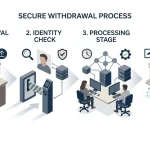
A withdrawal has two stages: the casino processes the request, then the payment provider or banking network delivers the funds. The method you choose affects the second stage, while the casino’s own processing time can affect the first. A fast payment rail cannot remove a delay while a request is waiting to be handled.
A specialist review reports that Skrill and Neteller withdrawals at foreign casinos are often cleared within 24 hours, with many processed in under 12 hours. These timings describe the casino-side process in the reported cases; they are not a guarantee for every transaction. Check the site’s withdrawal terms to see whether its stated time covers processing alone or the full transfer.
Bank transfers are the slower option in the same review: they can take five to seven business days, and some casinos add their own processing delay before sending the payment. This means the total wait can exceed the banking timeline. If timing matters, look for separate information about the operator’s handling period and the bank’s transfer period.
The review also reports that crypto withdrawals can clear in under an hour, faster than fiat methods in the cases described. Speed is only one part of the trade-off. Crypto values can move, so the amount’s value in pounds may change between withdrawal and conversion. A quick transfer does not protect you from that price movement.
Compare the method’s practical costs as well as its reported speed: whether you can receive it, how you would convert it if needed, and whether the value could change before you use it. Withdrawal terms vary by operator, so do not treat a timing quoted for one site as a standard for every overseas casino.
These sites are not regulated by the UK Gambling Commission, and they do not provide UKGC-mandated affordability checks. Payment speed does not indicate the level of oversight or protection attached to an account.
Follow the Money: A Casino’s Commercial Relationships
A casino brand can be connected to businesses that do not operate the gambling site itself. That matters because the money generated by play may flow beyond the brand you see on screen.
The Santeda–SIS arrangement illustrates the mechanism. Under their contract, SIS received a percentage of revenue from losing bets placed through Santeda’s brands. The payment was therefore linked to losses, rather than simply to a fixed fee for providing a service. That connection creates a potential conflict of interest: a commercial partner’s income can depend on how much customers lose. The contract detail does not, by itself, establish that SIS controlled gambling decisions or that any particular customer was treated unfairly.
Santeda’s Curaçao licence does not authorise it to operate in the UK or the United States. More broadly, offshore casinos are not regulated by the UK Gambling Commission and do not provide UKGC-mandated affordability checks. A brand’s commercial partners do not change those limits or create UKGC oversight.
When assessing a casino brand, separate three things: who runs the gambling site, who holds its licence, and which other businesses receive revenue under commercial agreements. A familiar brand name alone does not reveal that structure. Where a contract ties a partner’s payment to losing-bet revenue, that is a relevant financial relationship to understand—but it is not a substitute for checking the operator’s regulatory status or the terms that apply to customers.
What to Expect When You Open an Overseas Casino Account
Opening an account at an overseas casino generally involves two practical steps: providing identification and selecting how to fund the account. The exact screens and requested documents depend on the operator, so read the instructions displayed during registration rather than assuming every site follows the same process.
You will be asked to provide identification so the operator can check your details and meet its stated verification requirements. Operators must verify a customer’s age before allowing a deposit. Submit information that matches your identity; a mismatch may prevent the account from being verified or used as intended.
Once the account is ready for funding, choose a deposit method offered by the site. Options may include cryptocurrency, but availability depends on the operator and the payment methods it supports. Check the currency and instructions shown before sending funds: a crypto payment must use the specified asset and destination details, and cryptocurrency values can change. Do not assume that a method available for deposits will also be available for withdrawals; those are separate account functions.
These steps explain the mechanics of registration and funding, not whether an operator is permitted to serve people in Britain. Overseas casinos are not regulated by the UK Gambling Commission, and they do not provide UKGC-mandated affordability checks. Their account procedures therefore should not be treated as equivalent to the safeguards at a UKGC-licensed operator. If you are considering opening an account, understand those limits before sharing personal information or depositing money.
Limits and Verification Before You Deposit or Withdraw
A deposit limit controls how much you can add to a gambling account over the period set in its terms. The limit affects deposits, not the timing of a withdrawal. At UK Gambling Commission-licensed operators, a lower limit must take effect immediately. Raising a limit is treated differently: the operator must apply a 24-hour cooling-off period before the increase takes effect. That delay gives you time to reconsider rather than making extra funds available at once.
Check the account’s limit settings before depositing. If you reduce a limit, the change should apply straight away; if you request an increase, do not assume you can deposit at the higher level immediately. The distinction is important when planning your spending, because a pending increase does not override the existing limit.
Identity checks are a separate part of account control. UKGC-licensed operators must verify your identity before processing a withdrawal. If you are asked for documents, the request is part of that verification requirement; it is not a payment-method rule. Keep your account details accurate so the operator can match them to the information you provide.
A site outside the UKGC system does not provide the same regulatory safeguards. Non-UK online casinos accepting UK players are not regulated by the UK Gambling Commission, and they do not have to provide UKGC-mandated affordability checks. Do not assume that a limit setting or identity procedure on such a site works like one at a UK-licensed operator. Read the operator’s own terms carefully, and treat any control you cannot confirm as unavailable rather than relying on it to prevent further deposits.
Are foreign casinos safe for UK players to use?
Not necessarily. Some use encryption and hold overseas licences, but they are outside UKGC oversight, and players have sometimes been unable to recover winnings when an unlicensed site refused to pay.
Are bonuses at foreign casinos actually better than at UKGC-licensed sites?
They often offer larger welcome packages because they are not subject to UKGC restrictions on bonus terms and promotions. Check the wagering requirements: a £100 bonus with a 35x requirement means £3,500 in qualifying bets before the bonus can become withdrawable.
Is it legal for UK residents to use casino sites that operate outside the UK’s licensing framework?
Yes, placing bets with an overseas operator is not illegal for an individual UK player. However, an operator without a UKGC licence acts illegally by offering gambling to customers in England, Scotland or Wales.
Are winnings from foreign casinos taxable in the UK?
No. Gambling winnings are not subject to UK income tax, whether the casino is UKGC-licensed or not.
Can I use cryptocurrency at foreign casinos from the UK?
Yes, some foreign casinos offer cryptocurrency as a payment option. Crypto withdrawals can clear in under an hour, but the value can fluctuate.
What is the fastest way to withdraw from an online casino in the UK?
E-wallets are generally the fastest option on the UK market, with most operators processing withdrawals within 24 hours. At foreign casinos, crypto withdrawals can be faster still, often clearing in under an hour.
Is playing at an international casino legal for UK residents?
Yes, UK residents are not prohibited from placing bets with an overseas casino. The operator, however, must hold a UKGC licence to offer gambling services to customers in England, Scotland or Wales.
Casinos

£1 Minimum Deposit Casinos in the UK: What to Know
A £1 cashier minimum can allow a deposit, while promotion eligibility and withdrawals follow separate...

£10 Minimum Deposit Casinos in the UK: How It Works
A cashier minimum sets the entry point for funding an account; it does not determine...

£2 Minimum Deposit Casinos in the UK: What It Means
A cashier accepting £2 does not guarantee bonus eligibility or immediate access to withdrawals; those...

£20 Minimum Deposit Casinos in the UK: How They Work
A cashier minimum sets the smallest accepted deposit, while the balance remains separate from the...

£3 Minimum Deposit Casinos in the UK: Key Rules
The cashier threshold is only one rule; payment methods, bonus terms and play limits can...

£4 Minimum Deposit Casinos in the UK: Explained
A cashier minimum is only one account rule; game stakes, offer conditions and withdrawal thresholds...

£5 Minimum Deposit Casinos in the UK: How It Works
A cashier minimum sets the amount accepted for a deposit, while separate rules govern game...

Anjouan Casino Licence in the UK: What It Means
An Anjouan authorisation is separate from UKGC permission, so the licence alone does not establish...

Casino Apps in the UK: Mobile Play and Features
See how apps and browsers handle casino games, and what to consider for mobile play,...

Instant Withdrawal Casinos UK: How Payouts Work
Payout speed depends on the full route from confirmed request to funds arriving, as well...

International Casinos for UK Players: What to Know
A practical guide to licensing, access, bonus terms and protections when an overseas operator accepts...

Pay by phone credit at UK mobile casinos
Pay by Phone routes a casino deposit through a participating network or payment partner, with...

Offshore Casino Sites for UK Players: Rules and Risks
The guide explains licensing, payments, identity checks and bonus terms without presenting a ranked shortlist....

Offshore casinos for UK players: what to check
A practical guide to licensing, bonus terms, crypto payments, verification and the protections lost outside...

British Casinos Outside GamStop: What to Know
GamStop covers participating UKGC-licensed operators, so its exclusion does not apply universally to every gambling...

Casino no-ID verification in the UK: how checks work
A document-free sign-up does not remove identity checks; UK-licensed casinos often verify details before the...

Casino Not on GamStop Instant Withdrawals: Key Factors
Withdrawal speed can depend on casino processing as well as the payment route and checks...

Casino sites not registered with GamStop UK: what to know
The guide explains where GamStop applies, what an overseas licence means, and which terms and...

No-ID-Verification Casino Withdrawals in the UK
Registration, identity checks and payment settlement are separate stages, so a quick deposit or payout...

Casinos Without a Swedish Licence: UK Rules
A licence from outside the UKGC does not place a casino under the Commission’s supervision,...

Casinos That Bypass GamStop: What It Means
GamStop restrictions apply within the UKGC framework, so licence status—not a casino’s label—defines the distinction....

Curacao Casino Licence UK: What Players Should Know
A Curacao licence identifies a licensing jurisdiction, but does not establish that an operator is...

Fast Withdrawal Casinos in the UK: What to Check
A payout is complete only when funds reach the selected account, so processing status alone...

Gibraltar Casino Licences in the UK: What to Check
A Gibraltar licence claim does not establish UKGC oversight or show which controls, payment terms...

Jackpot Mobile Casino UK: How Jackpots Work on Phones
A UK guide to how jackpot prizes are built, when they are paid, and what...

Merkur Casino Online UK: Slots and Safety Checks
A practical guide to UK-licensed Merkur slots, covering spin controls, demo access, stakes, bonuses and...

UK Online Casino Trustworthiness: Licence Checks
A UKGC register entry is one part of the picture, alongside market eligibility, payment terms,...

No Account Casino UK: How the Process Works
No-account services can simplify the entry step, but operators may still keep customer records and...

No Minimum Deposit Casinos in the UK: What £1 Means
A low cashier minimum does not automatically qualify a deposit for a promotion or make...

Non-Gamban Casinos in the UK: What the Claim Means
A claim that a casino is not blocked by Gamban does not establish endorsement, UK...

Non-GamStop Curaçao Casino Sites and UK Exclusion
The guide explains the reach of GAMSTOP and individual casino exclusions, and how to assess...

Non-GAMSTOP European Casinos: What to Know
GAMSTOP applies to participating online operators, while this guide avoids unverified lists and treats bonus...

Non-UK Licence Casinos: What the Licence Means
A licence identifies an operator’s regulator, but does not guarantee UK oversight or the same...

Non-UK-Registered Casinos: How Regulation Works
The guide separates company registration from gambling oversight and explains how payments, bonus terms and...

Non-UK-Regulated Casinos: Rules for UK Players
UKGC authorisation depends on serving customers in Great Britain, while an overseas licence does not...

Non-UKGC Licensed Casinos: Rules and Risks
The guide explains the difference between UKGC oversight and overseas licensing, including what each licence...

Malta MGA Licence and UK Online Casinos: What It Means
An MGA licence covers Malta’s regulatory system; serving customers in Great Britain requires separate UKGC...

Online casino no registration UK: browser play explained
Browser play avoids installing casino software, but it does not by itself remove account requirements...

Online Casinos With No Sister Sites in the UK
Separate ownership, platform control and licensing to assess whether two casino brands genuinely belong to...

Online Slots Not on GamStop: What It Means
GamStop status depends on whether a gambling operator is within UKGC jurisdiction, not on a...

Quick Withdrawal Casinos in the UK: Payout Timing
Payout speed depends on processing, the cashier method and whether bonus wagering or other conditions...

Safe Online Casinos in the UK: Legal Checks and Protections
A UKGC licence is the starting point, but domain, operator, payment, bonus and dispute checks...

Same-Day Payout Casinos in the UK: What to Know
A withdrawal’s arrival time depends on casino processing, the selected payment route and conditions that...

Online Casino Payouts in the UK: RTP Explained
RTP and house edge describe expected returns, while withdrawal speed concerns access to funds; neither...

Trusted Casinos Not on GamStop UK: What to Check
The guide separates operator claims from independent oversight and explains the limits of protections, reviews,...

Trusted UK Casino Checks: Licensing and Status
A practical guide to licensing, regulatory records, crypto claims, app checks, bonus terms and payment...

USA Casinos for UK Players: Legal Status and Risks
A practical guide to UKGC licensing, overseas access, payment risks, bonus terms and limits at...

VPN-Friendly Casinos in the UK: Access and Checks
A practical overview of VPN access, casino rules, location checks and payment considerations for UK...