Gibraltar Casino Licences in the UK: What to Check
 Available in GB

A Gibraltar licence claim does not establish UKGC oversight or show which controls, payment terms and complaint protections apply.
Table of Contents
- What “Best” Means When a Casino Is Outside UKGC Oversight
- What a Gibraltar Casino Site’s Licence Does—and Does Not—Tell You
- How to Interpret Claims That a Casino Is “Top” or “Leading”
- Real-Money Play: Payments, Bonus Terms and Withdrawal Conditions
- What UK Players’ Legal Position Depends On
- How to Read a Gibraltar Casino Licence Claim
- What an Offshore Casino’s Complaint and Fund Protections Can Mean
- How Deposits and Withdrawals Can Differ Across Online Casinos
- What to Check Before Using a Newly Launched Site
- Why an Operator’s Base Does Not Establish Its UK Status
What “Best” Means When a Casino Is Outside UKGC Oversight
A “best” label is not a safeguard. If you are assessing an online casino associated with Gibraltar, the useful question is not whether it appears near the top of a list, but what happens when you need to control your gambling, protect your information or challenge a decision. Those outcomes depend on the protections available to you in practice, not on promotional language.
Start with responsible-gambling controls. Check what the account lets you do to restrict your own play, and whether those controls are clearly explained before you deposit. A non-UK-regulated casino may apply less stringent responsible-gambling rules than a UKGC-licensed operator. You should not assume that tools required by the UK framework will be present, or that a control described in general terms works in the same way. If a site does not explain how a limit or exclusion takes effect, treat that uncertainty as relevant to your decision.
The consequences are practical. Without mandatory responsible-gambling tools, you may have fewer built-in ways to interrupt access or restrict activity when you decide to stop. Casinos not on GamStop are outside the UK Gambling Commission’s self-exclusion scheme, so a GamStop exclusion does not cover them. If you rely on that scheme to block gambling, access to a separate site can undermine the boundary you intended to set. Do not treat the absence of a block as evidence that the site has assessed whether continued play is safe for you.
If you’re checking casino options in the context of Gibraltar licensing, confirm each operator’s current licence status separately; the details here don’t establish it. Payout speed is the only operator-specific information available for this list.
1. x3bet
Payout speed: 1-3 business days You can expect payouts in 1–3 business days.
2. SpinFormula
Payout speed: 1-3 business days You can expect payouts in 1–3 business days.
3. Zombillion
Payout speed: 1-3 business days You can expect payouts in 1–3 business days.
4. NightLuck
Payout speed: 1-3 business days You can expect payouts in 1–3 business days.
5. Revery Play
Payout speed: 1-3 business days You can expect payouts in 1–3 business days.
6. BeOnBet
Payout speed: 1-3 business days You can expect payouts in 1–3 business days.
7. SlotoSport
Payout speed: 1-3 business days You can expect payouts in 1–3 business days.
8. EvoSpin
Payout speed: 1-3 business days You can expect payouts in 1–3 business days.
9. Amunbet
Payout speed: 1-3 business days You can expect payouts in 1–3 business days.
10. WinBeast
Payout speed: 1-3 business days You can expect payouts in 1–3 business days.
Data protection deserves the same scrutiny. A non-UK-regulated casino may operate under less stringent data-protection rules than a UKGC-licensed operator. Before opening an account, look for a clear explanation of what information is collected, why it is used, and how the operator handles it. Consider whether you are comfortable providing the information the site requests and whether its privacy terms make the handling understandable. If those terms are difficult to find or too vague to explain the process, that is a concrete weakness in your ability to assess the service.
Dispute options are another part of practical protection. When a decision about your account or a complaint is disputed, the route for challenging it matters. Players using offshore casinos lose access to the UK’s Financial Ombudsman Service and to mandatory responsible-gambling tools. You should therefore check what complaint process the operator itself describes, how to submit a complaint, and whether it explains what happens after submission. A contact form or a promise of customer support is not, by itself, an independent way to resolve a dispute.
Read the complaint terms before you need them. Identify whether the operator says it will review complaints, what information it expects you to provide and how it communicates a decision. Keep copies of the relevant terms and your own correspondence if you proceed: a clear record can help you explain what happened, even though it cannot create an external remedy that the site does not offer. Do not assume that a complaint can be escalated to a UK body simply because you are in Britain or because the site accepts your registration.
Jackpot Mobile Casino UK: How Jackpots Work on Phones
A practical assessment therefore has several parts: usable controls for limiting or stopping play, understandable privacy information, and a complaint route whose steps are stated in advance. You can compare those features without treating a ranking, an attractive design or a Gibraltar reference as proof of protection. If a safeguard is important to you, verify that the specific site offers it and understand its limits before you create an account.
There is no single feature that makes an overseas casino “best” for every player. A site with a clear complaint procedure may still lack the gambling controls you need; a visible self-restriction option does not settle questions about data handling. Assess each protection separately, then decide whether the remaining gaps are acceptable. Where you depend on UK-standard safeguards or an external UK complaint route, an overseas site may not meet that requirement.
What a Gibraltar Casino Site’s Licence Does—and Does Not—Tell You
A non-UK-regulated casino is an online gambling site that operates without oversight from the UK Gambling Commission (UKGC). Its operator may hold a licence from a regulator elsewhere. Malta, Curaçao, Gibraltar and Anjouan are among the jurisdictions that may license online gambling businesses.
Licensing Jurisdictions
A non-UK-regulated casino may hold a licence from several jurisdictions, including Malta, Curaçao, Gibraltar, and Anjouan.
That distinction matters when you encounter a site described as a “Gibraltar casino”. The phrase may refer to the jurisdiction associated with its licence, but it does not, by itself, establish that the site is overseen by the UKGC. A licence issued in Gibraltar and a UKGC licence are separate regulatory statuses. The word “licensed” therefore needs context: you need to know which authority is said to have issued the licence, rather than treating the word as proof of UK oversight.
Nor does a Gibraltar reference necessarily tell you where every part of the business is located. A casino brand, the company operating its website and the entity named on a licence may not be described in the same way. A site’s label is not enough to resolve those distinctions. The practical point is to separate what the site claims about its licensing jurisdiction from what that claim says about UKGC oversight: those are not interchangeable statements.
The same applies to descriptions such as “Gibraltar online casino sites” or “Gibraltar slots”. They group sites or games by an association with a location; they do not establish that every site in the group has the same regulatory status. A slot’s availability on a website does not tell you which authority oversees the operator, and the location attached to a company or brand does not answer that question either.
Gibraltar is one of several places that may license online gambling operators. It is not a synonym for the UKGC, and the presence of a Gibraltar connection should not be read as confirmation that the operator falls under UKGC oversight. Conversely, a site’s lack of UKGC oversight does not, on its own, tell you which other jurisdiction—if any—has licensed it. The licence location and the existence of a licence are separate details.
Malta MGA Licence and UK Online Casinos: What It Means
This is why the phrase “Gibraltar casino licence” should be read narrowly. It points to a claimed licensing connection with Gibraltar; it does not, without more, establish how a site is treated under another regulator’s system. Do not infer that a licence in one jurisdiction carries the authority or protections of a different regulator. Equally, the label alone cannot tell you the specific conditions attached to an operator’s licence. Those questions require information about the particular operator and the particular licence, not a general label applied to a site.
“Casinos not on GamStop” is another category that describes a particular distinction, not a licensing jurisdiction. GamStop is the UKGC’s self-exclusion scheme, and casinos outside it are not included in that scheme. So a site associated with Gibraltar may also be described as not on GamStop, but those descriptions do different jobs: one refers to a claimed licensing location, while the other says the site is outside the scheme. Neither phrase, alone, proves the other.
Safe Online Casinos in the UK: Legal Checks and Protections
For you, these distinctions help prevent a location label from doing more work than it can. “Gibraltar” does not automatically mean UKGC-regulated; “not on GamStop” does not identify a regulator; and “licensed” is incomplete unless the licensing authority is clear. Treat each as a separate piece of information rather than combining them into a single assumption about what oversight applies.
How to Interpret Claims That a Casino Is “Top” or “Leading”
Words such as “top”, “leading” or “best” are descriptions, not evidence of how a casino is regulated or how it handles withdrawals. A page describing top online casinos in Gibraltar may be discussing sites associated with Gibraltar, sites available to people searching from there, or simply using the location as a label. The wording alone does not establish which meaning applies. Nor does it tell you whether a site has UK Gambling Commission oversight or what will happen when you request a payout.
Payout Deadlines
Outside UKGC oversight, there is no regulatory clock to enforce a withdrawal deadline; stated estimates are not dependable promises.
For a player, the useful question is not how prominently a casino is described but what its published withdrawal rules commit it to do. Check the stated processing time and distinguish it from the time taken by a bank, e-wallet or other payment provider after the operator has approved the payment. A single headline such as “fast payouts” can blur those separate stages. Look for the conditions that start the clock, any checks that can pause processing, and whether the operator gives a clear explanation of delays.
Published estimates for non-UK-regulated casinos do not agree. One account describes withdrawals as potentially taking as long as three or four weeks, while another says they can be completed within 24 hours to five business days. Treat these as competing descriptions, not as a dependable promise that every site will fall within either range. The key difference is that, outside UKGC oversight, there is no regulatory clock to enforce a withdrawal deadline. A stated estimate may therefore tell you what the operator says it aims to do, without giving you an equivalent means of making it meet that estimate.
Timing is only one part of the payout terms. A specialist review reports that some non-UK-regulated casinos set daily, weekly or monthly withdrawal caps. If a cap applies, a large balance may have to be paid in instalments rather than as one withdrawal. That can change how long it takes to receive the full amount even if each individual payment is processed promptly. Because such limits can depend on the operator and its current terms, check the rules that apply to the specific account rather than assuming the same cap applies across sites described as top Gibraltar casino sites.
Casinos Without a Swedish Licence: UK Rules
Read the withdrawal page alongside the general terms, and look for the wording that applies to your account. Confirm whether a limit is expressed per day, week or month, whether it applies to the amount requested or paid, and whether the operator reserves the right to change its terms. If the documents give inconsistent answers, the promotional label does not resolve the conflict. Keep a copy of the terms you relied on and any relevant account messages; these can help you identify what was stated if a payment is delayed or divided.
A “top” label cannot settle these practical questions. It does not establish a payout schedule, remove a withdrawal cap or guarantee that an estimate will be met. Compare the operative terms, not the rank assigned by a page, and treat any stated processing period as an estimate unless the conditions clearly make it binding.
Real-Money Play: Payments, Bonus Terms and Withdrawal Conditions
A deposit is only the first step in a real-money transaction. The route you use to fund an account, the payment processor handling it and the casino’s withdrawal rules can all affect what happens when you request a payout. Non-UK-regulated casinos may set more flexible deposit and withdrawal policies than UKGC-regulated operators, but flexibility does not mean every method works in both directions or that a withdrawal will be immediate.
Do
- Confirm the deposit route
- Read bonus rules before accepting
- Check withdrawal methods before funding
Don’t
- Assume deposits and withdrawals use the same route
- Infer bonus details from headlines
- Assume return journeys are immediate
Payment options can include credit cards, e-wallets, bank transfers and cryptocurrencies, sometimes processed through providers other than the payment brands you recognise. A crypto deposit, for instance, follows a different route from a card payment and can bypass the UK ban on credit-card-funded gambling. That does not establish that the casino is authorised to serve customers in Great Britain, nor does the method itself guarantee that the same route will be available for withdrawals.
Before depositing, check the cashier’s instructions for both transactions. A casino may list one method for adding funds but require a different route for paying out. Look for any stated processing steps, account conditions and withdrawal restrictions, and confirm which payment method applies to your account. If the available information addresses deposits but not withdrawals, do not assume the return journey will work the same way.
Published estimates of withdrawal timing conflict. Some descriptions put payouts at 24 hours to 5 business days, while others warn that withdrawals can take three or four weeks. These are not interchangeable promises: the payment method and the operator’s process can affect timing, and non-UK-regulated casinos have no UK regulatory clock enforcing a payout deadline. Treat a stated processing time as an estimate, not as confirmation of when funds will reach you.
Promotions add another set of conditions between a deposit and a withdrawal. A specialist review has reported welcome offers with wagering requirements of 35x or more; that should be treated as a reported offer detail, not a standard applying to every casino or bonus. The key is to find out what the multiplier applies to. A specialist review has also reported a 40x requirement that may be calculated on the bonus and deposit together, on the bonus alone, or on a package involving the bonus and free spins. The wording of the particular offer determines which calculation applies.
Merkur Casino Online UK: Slots and Safety Checks
This distinction changes how much play may be required before bonus-related funds can be withdrawn. If the terms use a combined deposit-and-bonus basis, the qualifying amount differs from a calculation based only on the bonus. Check whether the requirement applies to the whole balance or only promotional funds, which games count towards it, and whether a maximum stake or expiry condition is attached. Do not infer these details from the headline offer.
The practical sequence is therefore: confirm the deposit route, read the bonus rules before accepting an offer, and check the withdrawal method and conditions before funding the account. Keep the terms that applied when you opted in. If a casino changes an offer or applies a condition you did not expect, those records help you identify what was promised and what rule is being used. A payment option can move money into an account; it cannot, by itself, establish the terms or timing for getting it back.
What UK Players’ Legal Position Depends On
The legal position has two separate parts: the rules governing the operator and the consequences for the person using the service. They should not be treated as the same question. A site’s availability to a British customer does not, by itself, establish that the operator is authorised to offer gambling in Great Britain.
Under the Gambling Act 2005, the relevant licensing duty falls on operators that supply gambling services into the UK market. A business serving customers in Great Britain must hold a UK Gambling Commission licence for that activity. Its corporate registration or a Gibraltar online gambling licence does not replace that requirement. The obligation is tied to serving the market, not simply to the country where a company is established.
Licensing Duty
A business serving customers in Great Britain must hold a UK Gambling Commission licence; an overseas registration or Gibraltar licence does not replace this requirement.
That distinction matters when you encounter a Gibraltar casino online. The operator’s overseas licence may describe its relationship with the authority in that jurisdiction, but it does not answer whether the operator holds the UKGC permission required to serve Great Britain. A British customer being able to open a site or create an account is not proof of that permission. Nor does the operator’s claim that it accepts UK customers alter the licensing rule.
The player’s position is different. UK law does not expressly make it an offence for a British citizen to use gambling services licensed abroad, and a person who gambles on a site lacking a UK licence does not thereby commit a criminal offence under UK law. This is not the same as saying that the operator is authorised to supply gambling in Britain. The absence of a player offence does not transfer the operator’s licensing duty to the customer or remove it.
It is also important not to turn that distinction into broader reassurance. The legal facts about player liability do not establish that a particular site is licensed, that its terms are enforceable in a particular dispute, or that using it has the same status as gambling with a UKGC-licensed operator. Those are separate issues. In practical terms, you should identify who operates the service and whether it holds the relevant UKGC licence, rather than infer status from the site’s name, its customer access, or a reference to Gibraltar.
A simple way to read the situation is to keep the two questions separate:
- Operator: Is the service supplying gambling to customers in Great Britain, and does it hold the UKGC licence required for that activity?
- Player: Does using a foreign-licensed or unlicensed service itself amount to a criminal offence under UK law? The stated legal position is that it does not.
This distinction prevents two opposite errors: assuming that an overseas licence automatically permits service to Great Britain, and assuming that the operator’s licensing breach makes the individual player criminally liable. The rules place the licensing requirement on the operator, while the player’s legal exposure is a different matter.
How to Read a Gibraltar Casino Licence Claim
A statement that a casino holds a Gibraltar licence identifies a claimed licensing connection; it does not, by itself, establish that the site is authorised by the UK Gambling Commission. These are separate regulatory questions. A Gibraltar casino licence and a UKGC licence are not interchangeable, and the wording on a casino’s website cannot turn one into the other.
Start by identifying the exact operator named in the claim. A brand name may differ from the legal company that runs the gambling site, so compare the company details shown in the site’s terms with the entity named in any licensing information. Then check whether the claim identifies the regulator and the scope of the authorisation. If those details are absent, unclear or inconsistent, the claim gives you little basis for understanding who is responsible for the service.
The distinction matters because licensing is tied to an operator and the markets it is permitted to serve. A reference to Gibraltar does not, on its own, confirm UKGC oversight or establish that the operator is authorised to serve customers in Great Britain. If you need to establish UK status, look for the relevant UKGC authorisation rather than treating an overseas licence as a substitute.
Verifying Licence Claims
Identify the Operator
Compare the company details in the site’s terms with the entity named in the licensing information.
Check the Regulator
Verify which authority issued the licence and the specific scope of the authorisation.
Confirm the Market
Determine if the authorisation specifically permits the operator to serve customers in Great Britain.
The same caution applies when a site uses broad wording such as “licensed internationally”. That description does not tell you which authority issued the licence, which company it covers or which countries the authorisation permits. Read the details attached to the claim, not just the label. A regulator’s name on a page is a starting point for checking the claim, not proof that every service offered by the brand falls within that regulator’s approval.
Anjouan shows why you must keep jurisdictions separate. An Anjouan licence does not authorise a casino to operate in the United Kingdom or in other markets that Anjouan lists as restricted. Anjouan-licensed casinos are also not required to integrate GAMSTOP or to provide an independent dispute-resolution process comparable to services approved under the UKGC system. Those are features of the Anjouan framework; they should not be attributed to Gibraltar or treated as conditions of a Gibraltar online casino licence.
The practical test is therefore not simply whether a site displays a licence badge. Ask which legal entity holds the claimed authorisation, which regulator issued it and what market the authorisation covers. Keep the answer to each question distinct: a Gibraltar connection is not evidence of UKGC licensing, and an Anjouan example cannot tell you what Gibraltar’s rules require. This prevents a licence claim from being read as broader permission or protection than it actually establishes.
What an Offshore Casino’s Complaint and Fund Protections Can Mean
A casino’s advertised licence and the protections attached to it are separate questions. For a site claiming an Anjouan casino licence, the framework’s stated limits have practical consequences for what happens to your balance, how game testing is required, and where a complaint can go. These points describe Anjouan, not Gibraltar: they should not be used to infer the conditions of a Gibraltar licence or the practices of every site associated with that jurisdiction.
USA Casinos for UK Players: Legal Status and Risks
Player funds if an operator fails
Anjouan’s framework does not require an operator to keep player funds in a separate account. A casino may choose to segregate funds, but the licence framework does not guarantee that it does so. If the operator fails while holding your balance, you may therefore rank among its unsecured creditors rather than have a protected claim to money held separately for players.
That distinction affects the status of funds, not just how quickly a withdrawal is processed. A displayed account balance does not, by itself, show that matching money is ring-fenced or available if the business becomes insolvent. To establish what a particular operator says it does, you would need to examine its own terms and disclosures; those statements are not equivalent to a framework-wide requirement.
Testing and audits
The Anjouan framework does not mandate random number generator (RNG) testing or audits. This does not establish that a particular casino’s games have never been tested. It means the licence framework does not require those checks as a condition in the way a mandatory rule would.
For you, the distinction is between a claim about an individual game or operator and an obligation imposed across the framework. If a site refers to testing, look for what was tested and who performed it rather than treating a general licence claim as proof. A licence alone does not demonstrate that games undergo independent testing or that an audit has taken place.
Player Funds
Anjouan’s framework does not require operators to keep player funds in a separate account.
RNG Testing
Random number generator testing and audits are not mandated by the Anjouan framework.
Dispute Resolution
There is no independent dispute resolution route comparable to UKGC-approved ADR services.
Complaints and escalation
Anjouan’s authority does not receive, mediate or decide player complaints. Anjouan-licensed casinos also lack an independent dispute resolution route comparable to the approved ADR services available under UKGC oversight. A complaint may still be submitted to the operator, but an internal response is not an independent decision.
The framework requires operators to respond to complaints within 30 calendar days. That is a response deadline, not a promise that the operator will resolve the dispute in your favour, and it does not create an external adjudication route. If the operator rejects your account of events or does not provide a satisfactory remedy, the authority’s role does not extend to deciding the individual case.
This is why a reference to an Anjouan licence should not be treated as evidence of guaranteed player-fund separation, mandatory testing or independent complaint review. Those are distinct protections, and the framework does not require them in the ways described above. A Gibraltar casino’s safeguards must be assessed on their own terms; Anjouan’s rules do not establish them.
How Deposits and Withdrawals Can Differ Across Online Casinos
A payment option shown at deposit does not tell you how a later withdrawal will be handled. The casino may use a different processor for outgoing payments, or require you to select a method from the options available when requesting a payout. Treat the deposit page as information about funding an account, not as confirmation of the route or timing for getting money back.
Online casino no registration UK: browser play explained
The distinction matters with non-UK-regulated casinos because payment routes can include alternatives to standard card processing. Cryptocurrency, for instance, can get around the UK restriction on using credit cards to fund gambling. That describes how the payment is made; it does not establish what withdrawal methods the casino supports or how a withdrawal will be processed.
A specialist review has also reported that some operators let customers fund accounts through a charge added to a mobile phone bill or a deduction from prepaid credit. This is a report about particular offerings, not a dependable feature of casinos generally. Before using any such route, check what the charge represents and whether the operator lists a separate withdrawal method. A payment that can put funds into an account does not necessarily provide a way to take them out.
Timing claims need similar care. Estimates for non-GamStop casinos are not consistent: one commonly cited range is 24 hours to 5 business days, with the method affecting the wait, while other accounts describe delays of up to three or four weeks. These are not interchangeable promises. Check the casino’s stated processing stages and the payment provider’s expected transfer time, and distinguish the operator’s approval period from the time a payment takes to arrive.
Before depositing, look for the withdrawal options and any method-specific instructions in the account or cashier information. Check whether the operator requires you to use a particular route, and whether that route is available to you. If the only clear information concerns deposits, you cannot infer the withdrawal process from it. A small test deposit does not resolve that uncertainty: it demonstrates only that the funding route worked, not that a payout will follow the same path or timetable.
Withdrawal Verification
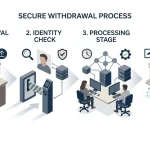
- Review stated processing stages
- Check payment provider transfer times
- Verify available withdrawal options
- Confirm method-specific instructions
What to Check Before Using a Newly Launched Site
A new casino’s account process may be harder to judge because there is little operating history to examine. Before depositing, read the rules for identity checks and withdrawals, including what documents may be requested, when checks can happen and how the operator says it will contact you. Keep a copy of the terms that apply when you open the account; if the wording changes later, you can compare it with what you accepted.
Verification can affect access to a withdrawal, not just account opening. A specialist review has reported that some non-UK-regulated operators may ask for notarised documents or a video call as part of withdrawal checks. Treat that as a report about particular operators, not as a standard procedure at every newly launched site. If a site’s own terms allow extra checks, identify what they could involve before sending money. If the steps are unclear, you cannot reliably predict what the operator may require when you ask to withdraw.
Check how the site accepts and handles complaints as a separate process. Find the complaint contact method, the information you must provide and the stated response period. Under Anjouan’s framework, an operator must respond to a complaint within 30 calendar days. A response deadline is not the same as a deadline for resolving the dispute, and it does not by itself establish that an independent body will review the outcome.
Keep records that make a later complaint easier to explain: account messages, relevant terms, verification requests and the dates on which you sent documents or contacted support. Do not send sensitive identity material through a channel you cannot verify as belonging to the operator. If the operator asks for additional verification, compare the request with its published process and ask for the reason and secure submission method in writing.
Curacao Casino Licence UK: What Players Should Know
A new launch, a polished website or a quick support reply cannot show how a difficult withdrawal or complaint will be handled. For a site presenting an Anjouan connection, distinguish the operator’s own complaint process from the framework’s response rule; neither should be mistaken for a guarantee that a dispute will be settled in your favour. If the handling of identity checks or complaints is not clear enough for you to assess, you can avoid opening an account.
Why an Operator’s Base Does Not Establish Its UK Status
An operator’s registered or operating base tells you where the business is located. It does not, by itself, tell you whether the operator is authorised to provide gambling services to customers in Great Britain. Those are separate questions: one concerns the company’s location; the other concerns the market it serves.
This distinction matters when a site describes itself as based in Gibraltar. That statement may identify a place of business, but it is not evidence that the operator holds the authorisation required for Great Britain. The same principle applies if a company is based elsewhere: location does not replace the licence required for the market in which it supplies services.
UK Online Casino Trustworthiness: Licence Checks
For operators serving customers in Great Britain, the relevant requirement is a licence from the UK Gambling Commission, regardless of where the operator is based. So a Gibraltar address cannot be used as a substitute for UKGC authorisation, nor does it establish that authorisation exists. The location and the permission to serve a particular market must be assessed independently.
When checking a “based in Gibraltar” claim, separate what the claim actually tells you from what it leaves unanswered. It may describe the operator’s base. It does not answer whether the operator holds a UK Gambling Commission licence for serving customers in Great Britain. Avoid treating a place name, a company address or a reference to regulation in another jurisdiction as proof of that specific status.
This is why “Gibraltar regulated” and “authorised to serve Great Britain” are not interchangeable descriptions. A location can be relevant to understanding where a business operates, but the key test for its British-market status is whether it has the required UKGC licence. The operator’s base does not change that requirement.
What payment methods work best at non-UK-regulated casino sites?
You may find credit cards, e-wallets, bank transfers and cryptocurrencies, sometimes processed through alternative providers. Some sites also accept payments charged to a mobile phone bill or deducted from a prepaid balance.
What are non-UK-regulated casinos?
They are online gambling sites that operate without oversight from the UK Gambling Commission. They may be licensed by another jurisdiction, such as Malta, Curaçao, Gibraltar or Anjouan.
How do casinos outside GamStop operate?
They operate outside the UK Gambling Commission’s self-exclusion scheme, so a GamStop exclusion does not block access to them. You should not assume that they provide the same responsible-gambling tools required under the UK framework.
What is the biggest risk of playing at a non-UK-regulated casino?
You may lack UK-standard safeguards and access to UK complaint routes, including the Financial Ombudsman Service and mandatory responsible-gambling tools. The operator’s own complaint process may not provide an independent way to resolve a dispute.
Casinos

£1 Minimum Deposit Casinos in the UK: What to Know
A £1 cashier minimum can allow a deposit, while promotion eligibility and withdrawals follow separate...

£10 Minimum Deposit Casinos in the UK: How It Works
A cashier minimum sets the entry point for funding an account; it does not determine...

£2 Minimum Deposit Casinos in the UK: What It Means
A cashier accepting £2 does not guarantee bonus eligibility or immediate access to withdrawals; those...

£20 Minimum Deposit Casinos in the UK: How They Work
A cashier minimum sets the smallest accepted deposit, while the balance remains separate from the...

£3 Minimum Deposit Casinos in the UK: Key Rules
The cashier threshold is only one rule; payment methods, bonus terms and play limits can...

£4 Minimum Deposit Casinos in the UK: Explained
A cashier minimum is only one account rule; game stakes, offer conditions and withdrawal thresholds...

£5 Minimum Deposit Casinos in the UK: How It Works
A cashier minimum sets the amount accepted for a deposit, while separate rules govern game...

Anjouan Casino Licence in the UK: What It Means
An Anjouan authorisation is separate from UKGC permission, so the licence alone does not establish...

Casino Apps in the UK: Mobile Play and Features
See how apps and browsers handle casino games, and what to consider for mobile play,...

Foreign Casinos for UK Players: Licensing and Rules
This guide explains how licensing, UK rules, GamStop, bonuses and payment checks apply to operators...

Instant Withdrawal Casinos UK: How Payouts Work
Payout speed depends on the full route from confirmed request to funds arriving, as well...

International Casinos for UK Players: What to Know
A practical guide to licensing, access, bonus terms and protections when an overseas operator accepts...

Pay by phone credit at UK mobile casinos
Pay by Phone routes a casino deposit through a participating network or payment partner, with...

Offshore Casino Sites for UK Players: Rules and Risks
The guide explains licensing, payments, identity checks and bonus terms without presenting a ranked shortlist....

Offshore casinos for UK players: what to check
A practical guide to licensing, bonus terms, crypto payments, verification and the protections lost outside...

British Casinos Outside GamStop: What to Know
GamStop covers participating UKGC-licensed operators, so its exclusion does not apply universally to every gambling...

Casino no-ID verification in the UK: how checks work
A document-free sign-up does not remove identity checks; UK-licensed casinos often verify details before the...

Casino Not on GamStop Instant Withdrawals: Key Factors
Withdrawal speed can depend on casino processing as well as the payment route and checks...

Casino sites not registered with GamStop UK: what to know
The guide explains where GamStop applies, what an overseas licence means, and which terms and...

No-ID-Verification Casino Withdrawals in the UK
Registration, identity checks and payment settlement are separate stages, so a quick deposit or payout...

Casinos Without a Swedish Licence: UK Rules
A licence from outside the UKGC does not place a casino under the Commission’s supervision,...

Casinos That Bypass GamStop: What It Means
GamStop restrictions apply within the UKGC framework, so licence status—not a casino’s label—defines the distinction....

Curacao Casino Licence UK: What Players Should Know
A Curacao licence identifies a licensing jurisdiction, but does not establish that an operator is...

Fast Withdrawal Casinos in the UK: What to Check
A payout is complete only when funds reach the selected account, so processing status alone...

Jackpot Mobile Casino UK: How Jackpots Work on Phones
A UK guide to how jackpot prizes are built, when they are paid, and what...

Merkur Casino Online UK: Slots and Safety Checks
A practical guide to UK-licensed Merkur slots, covering spin controls, demo access, stakes, bonuses and...

UK Online Casino Trustworthiness: Licence Checks
A UKGC register entry is one part of the picture, alongside market eligibility, payment terms,...

No Account Casino UK: How the Process Works
No-account services can simplify the entry step, but operators may still keep customer records and...

No Minimum Deposit Casinos in the UK: What £1 Means
A low cashier minimum does not automatically qualify a deposit for a promotion or make...

Non-Gamban Casinos in the UK: What the Claim Means
A claim that a casino is not blocked by Gamban does not establish endorsement, UK...

Non-GamStop Curaçao Casino Sites and UK Exclusion
The guide explains the reach of GAMSTOP and individual casino exclusions, and how to assess...

Non-GAMSTOP European Casinos: What to Know
GAMSTOP applies to participating online operators, while this guide avoids unverified lists and treats bonus...

Non-UK Licence Casinos: What the Licence Means
A licence identifies an operator’s regulator, but does not guarantee UK oversight or the same...

Non-UK-Registered Casinos: How Regulation Works
The guide separates company registration from gambling oversight and explains how payments, bonus terms and...

Non-UK-Regulated Casinos: Rules for UK Players
UKGC authorisation depends on serving customers in Great Britain, while an overseas licence does not...

Non-UKGC Licensed Casinos: Rules and Risks
The guide explains the difference between UKGC oversight and overseas licensing, including what each licence...

Malta MGA Licence and UK Online Casinos: What It Means
An MGA licence covers Malta’s regulatory system; serving customers in Great Britain requires separate UKGC...

Online casino no registration UK: browser play explained
Browser play avoids installing casino software, but it does not by itself remove account requirements...

Online Casinos With No Sister Sites in the UK
Separate ownership, platform control and licensing to assess whether two casino brands genuinely belong to...

Online Slots Not on GamStop: What It Means
GamStop status depends on whether a gambling operator is within UKGC jurisdiction, not on a...

Quick Withdrawal Casinos in the UK: Payout Timing
Payout speed depends on processing, the cashier method and whether bonus wagering or other conditions...

Safe Online Casinos in the UK: Legal Checks and Protections
A UKGC licence is the starting point, but domain, operator, payment, bonus and dispute checks...

Same-Day Payout Casinos in the UK: What to Know
A withdrawal’s arrival time depends on casino processing, the selected payment route and conditions that...

Online Casino Payouts in the UK: RTP Explained
RTP and house edge describe expected returns, while withdrawal speed concerns access to funds; neither...

Trusted Casinos Not on GamStop UK: What to Check
The guide separates operator claims from independent oversight and explains the limits of protections, reviews,...

Trusted UK Casino Checks: Licensing and Status
A practical guide to licensing, regulatory records, crypto claims, app checks, bonus terms and payment...

USA Casinos for UK Players: Legal Status and Risks
A practical guide to UKGC licensing, overseas access, payment risks, bonus terms and limits at...

VPN-Friendly Casinos in the UK: Access and Checks
A practical overview of VPN access, casino rules, location checks and payment considerations for UK...