UK Online Casino Trustworthiness: Licence Checks
 Available in GB

A UKGC register entry is one part of the picture, alongside market eligibility, payment terms, enforcement records and player protections.
Table of Contents
- What a UK Casino Licence Actually Tells You
- Why Great Britain and Northern Ireland Need Separate Checks
- What GAMSTOP Means for a Casino’s UK Status
- How Bonuses Affect the Real Cost of Play
- What to Check Before Playing Online Slots
- How to Assess Payment and Withdrawal Claims
- A Register Entry Is Evidence, Not a Complete Verdict
- What Enforcement Records Can Reveal
- What Player Protection Looks Like in Practice
- How Identity Checks Affect Deposits and Withdrawals
What a UK Casino Licence Actually Tells You
For a casino serving customers in Great Britain, a UKGC Licence is a legal requirement, not a badge an operator can choose to display. A business offering remote gambling to people in England, Scotland or Wales must hold the relevant licence from the UK Gambling Commission, wherever that business is based. The Commission regulates remote gambling offered to consumers in Great Britain.
That rule makes the licence a useful starting point when assessing whether an online casino is operating within the British regulatory system. It connects the operator’s activity with a specific regulator and legal framework. Without the relevant UKGC Licence, a business cannot lawfully offer the covered remote gambling facilities to consumers in Great Britain.
What the licence establishes
A licence establishes that the operator has regulatory authorisation for the activities covered by it. The important point is the relationship between the licensed business, the permitted activity and the market it serves. A website’s appearance, its use of British currency or its claim to accept British customers does not establish that relationship. The licence does.
When choosing an online casino, you should look for clear, practical information rather than relying on a trust label alone. The payout timeframe listed here gives you one specific point to consider for each operator.
1. x3bet
Payout speed: 1-3 business days You can use the listed payout speed of 1–3 business days as a practical reference when considering x3bet.
2. SpinFormula
Payout speed: 1-3 business days SpinFormula lists a payout speed of 1–3 business days, giving you a timeframe to consider.
3. Zombillion
Payout speed: 1-3 business days For Zombillion, the available detail is a listed payout speed of 1–3 business days.
4. NightLuck
Payout speed: 1-3 business days You can take NightLuck’s listed payout speed of 1–3 business days into account.
5. Revery Play
Payout speed: 1-3 business days Revery Play lists payouts as taking 1–3 business days, a useful detail for your review.
6. BeOnBet
Payout speed: 1-3 business days The available payout information for BeOnBet is 1–3 business days.
7. SlotoSport
Payout speed: 1-3 business days SlotoSport lists a payout speed of 1–3 business days for you to consider.
8. EvoSpin
Payout speed: 1-3 business days EvoSpin’s listed payout speed is 1–3 business days.
9. Amunbet
Payout speed: 1-3 business days You have one stated timeframe to consider for Amunbet: payouts are listed as taking 1–3 business days.
10. WinBeast
Payout speed: 1-3 business days WinBeast lists a payout speed of 1–3 business days, which gives you a concrete detail to review.
The operator’s location does not remove the requirement. A company based outside Great Britain still needs the relevant UKGC Licence if it offers remote gambling facilities to consumers in Great Britain. The rule follows the market being served, rather than simply the address from which the business operates.
This distinction matters because a casino brand and the company legally responsible for operating it are not necessarily described in the same way. When you assess a site, the relevant question is not simply whether the brand says it is licensed. You need to establish that the operating business holds the licence relevant to the gambling being offered to British customers. A licence statement is a claim; the regulatory status behind it is what gives that claim meaning.
A baseline, not a complete verdict
A current UKGC Licence is strong evidence that an operator is authorised to provide the covered service in Great Britain. It is not, by itself, proof that every aspect of the customer experience will be satisfactory. A licence does not tell you whether a particular promotion is good value, how a payment will be handled, or whether a site’s interface will suit you. Those are separate questions, and they should not be collapsed into a general label such as “trustworthy”.
The same distinction applies to trust. Licensing establishes a regulatory baseline; it does not eliminate the need to understand what you are using. Two sites may both operate under the British licensing system while differing in their terms, products and service. Conversely, polished design or persuasive claims about reliability cannot substitute for the required authorisation.
No Account Casino UK: How the Process Works
A careful assessment therefore separates three ideas. First, is the operator legally authorised to offer the relevant remote gambling in Great Britain? Second, does the site you are using belong to that authorised operation? Third, are the specific terms and services acceptable to you? A licence addresses the first question and helps frame the second. It cannot answer every practical question in the third.
This is why the phrase “most trustworthy online casino” should not be treated as a formal regulatory category. The regulator grants licences; it does not confer a general title declaring one casino the most trustworthy. A licensed operator meets the threshold of authorisation for its covered activity, but that threshold is not the same as a recommendation or a guarantee of a particular outcome.
How to use the baseline
Begin with the nature of the service: you are looking at remote gambling offered to consumers in Great Britain. The business providing that service must have the relevant UKGC Licence, regardless of where it is established. If an operator’s claim is vague, treat that as a reason to establish which business holds the authorisation and whether it relates to the service in front of you, rather than relying on wording or visual design.
Do not infer licensing from a site name alone. A brand may be familiar, but familiarity does not establish which legal entity operates the site or whether the relevant activity is authorised. Likewise, a general reference to regulation is not enough to show that the operator holds the licence required for the British market. The substance of the claim is the operator’s authorisation for the service it is offering.
Do
- Establish which business holds the authorisation
- Verify the licence relates to the service you are using
- Check the regulatory status behind the claim
Don’t
- Rely on a site’s visual design or wording
- Infer licensing from a brand name alone
- Trust a general reference to regulation without detail
The practical conclusion is narrow but important: a UKGC Licence is the regulatory starting point for a lawful online casino serving Great Britain. It tells you that the operator is authorised within the relevant system for the covered activity. It does not settle every question about how the casino behaves or whether its offers suit you. Treat licensing as a necessary baseline for assessing a trustworthy casino, not as a complete verdict on the site.
Why Great Britain and Northern Ireland Need Separate Checks
The word “UK” can make gambling regulation sound uniform across the country. For remote casinos, that assumption can lead you to read a register entry as proof of something it does not establish. The Gambling Commission’s authority under the Gambling Act 2005 covers Great Britain; Northern Ireland is not within its remit for remote-gambling provision in the same way.
That distinction affects what you can infer from a UK Gambling Commission register search. The register is relevant to remote gambling offered to consumers in Great Britain. It does not provide the same regulatory assurance about an operator’s provision of remote gambling in Northern Ireland. A result that answers a question about Great Britain should not automatically be treated as an answer about every part of the UK.
The boundary is about jurisdiction, not geography of the operator
A casino’s company address does not determine which regulatory question you are asking. The important distinction here is the market in which remote gambling is offered and which authority has jurisdiction over that provision. An operator based outside Great Britain can still fall within the Gambling Commission’s remit when it offers remote gambling to consumers in Great Britain. Conversely, a company name appearing in a UKGC search does not, by itself, establish that the register covers its remote-gambling provision in Northern Ireland.
International Casinos for UK Players: What to Know
This is why “UK casino” can be too broad a description for a regulatory check. You need to separate at least two questions: whether the relevant provision falls within the Gambling Commission’s Great Britain remit, and what the applicable position is for a person in Northern Ireland. The first can be assessed against the UKGC’s jurisdiction and records. The second cannot be answered by treating those records as if they had nationwide coverage.
What a register search can—and cannot—show
Suppose you search for a casino brand or its operating company and find a result. That result can be useful when your concern is remote gambling offered to customers in Great Britain. But the fact that the result exists does not enlarge the regulator’s remit. It cannot turn a Great Britain record into a complete assessment of Northern Ireland provision.
The same limit applies when a search produces no result. A missing entry is not, on its own, a determination of the operator’s status under the rules relevant to Northern Ireland. The search has only answered what the register shows within its own scope. Treating an absent result as a definitive legal conclusion about another jurisdiction would give the database more reach than the regulator has.
This distinction matters when people use “trustworthy” to mean “verified by the UK regulator”. That phrase needs a location attached to it. A UKGC check can support an assessment of an operator’s position in Great Britain, but it is not a substitute for a separate check of the relevant Northern Ireland position. Nor does a single brand label settle which company or service is involved; the regulatory question must concern the provision you intend to use.
Attention: A UKGC register result for Great Britain does not provide the same regulatory assurance for remote gambling provision in Northern Ireland.
Make the check match where you are
If you are in England, Scotland or Wales, the relevant remote-gambling question falls within the Gambling Commission’s Great Britain framework. If you are in Northern Ireland, do not assume that a UKGC register result gives the same assurance about the service available to you. The point is not that a register search is useless; it is that its answer has a territorial boundary.
Use precise wording when evaluating a claim. “Listed with the Gambling Commission for Great Britain” says something different from “regulated throughout the UK”. The latter implies coverage that the Commission’s jurisdiction does not provide for Northern Ireland remote-gambling provision. When a casino describes itself as UK-regulated, identify the territory that statement actually covers rather than relying on the broad label.
The practical test is therefore not simply whether a casino appears somewhere in a UK register. First establish which part of the UK the service is being offered to, then use the regulator and records whose remit matches that territory. This prevents a correct Great Britain result from being mistaken for a complete Northern Ireland assessment, and keeps the meaning of any trust claim tied to the jurisdiction it can support.
What GAMSTOP Means for a Casino’s UK Status
GAMSTOP is the online self-exclusion service used within the Gambling Commission’s Great Britain regulatory regime. Its relevance to a casino’s UK status is specific: remote operators licensed by the Commission must participate in the scheme. Participation became compulsory on 31 March 2020.
Merkur Casino Online UK: Slots and Safety Checks
That requirement makes claims about a casino being “not on GAMSTOP” more than a description of its settings. If an operator offers online gambling to customers in Great Britain under a Gambling Commission licence, it must participate. A claim that the same operator is outside GAMSTOP therefore conflicts with the requirements of that regime. It is not evidence that the casino is a more trustworthy alternative; it raises a question about whether the claim, the operator’s identity or its regulatory status is being described accurately.
What the claim can and cannot tell you
The phrase “non-GAMSTOP casino” is not a separate UK licence category. It does not tell you who operates the site, which company accepts your account, or whether that company holds a UKGC Licence. Nor does the phrase establish that the operator is trustworthy. A website can use marketing language, but the wording does not change the obligations that apply to an operator serving Great Britain under the Commission’s regime.
The useful test is the relationship between the claim and the operator’s status. If a site says it accepts Great Britain customers but is not part of GAMSTOP, do not treat that as a special form of UK approval. The claim is inconsistent with the participation requirement for Gambling Commission licensees. You would need to establish which operator is behind the site and whether it is authorised for the market; the GAMSTOP wording alone cannot answer either question.
Conversely, a casino’s participation in GAMSTOP is not a complete verdict on its conduct or service. It indicates that the operator is subject to a specific requirement within the Commission’s system. It does not, by itself, prove that every account issue will be handled well or that a particular customer will have a positive experience. Trust should not be reduced to one feature, but this feature has a clear regulatory meaning.
Regulatory Conflict
If a site accepts Great Britain customers but claims to be outside GAMSTOP, it conflicts with the compulsory participation requirements for Gambling Commission licensees.
Why this matters for self-exclusion
Self-exclusion is a control for people who want to prevent themselves from gambling with participating operators. The compulsory participation rule means that operators in the Great Britain licensing regime cannot present exclusion from GAMSTOP as an optional distinction that makes them more suitable for customers seeking a UK-regulated casino. The scheme’s purpose is connected to restricting access, not to certifying the quality of an operator.
If you have chosen to self-exclude, a site’s claim that it is outside GAMSTOP should not be read as a safe workaround or as proof that the site is trustworthy. It indicates that the operator may not be within the Commission’s Great Britain regime, or that the claim needs checking. Those are materially different possibilities, and the slogan cannot distinguish between them.
When you see claims about trustworthy casinos outside GAMSTOP, separate two questions: does the operator participate in the relevant UK regulatory system, and does the casino’s conduct meet your expectations? For Great Britain licensees, participation is compulsory. A claim of non-participation is therefore not a mark of extra trust; it is a reason to scrutinise what the operator is claiming about its UK status.
How Bonuses Affect the Real Cost of Play
A bonus changes the amount you can use, but it does not necessarily reduce the cost of completing its terms. The key figure is the wagering requirement: the amount of qualifying stakes you must place before bonus funds or winnings linked to the offer can be withdrawn. Read it as a calculation, not as a description of how much money you will receive.
Casinos Without a Swedish Licence: UK Rules
For instance, a specialist review gives the example of a £20 bonus with 10x wagering. The required total is £200 in stakes: £20 multiplied by 10. That does not mean you need to deposit £200, nor does it guarantee that £200 will remain in your balance. Each qualifying bet contributes towards the target, and the balance can rise or fall while you play. The practical cost therefore depends on the terms and on what happens to your funds during play.
Check what the multiplier applies to. It may be calculated against the bonus alone or against the deposit and bonus together; those bases produce different turnover targets. A separate specialist review describes a 100% match bonus capped at £200 with 30x wagering. The headline percentage and cap are not enough to calculate the requirement: you also need to know whether the multiplier applies to the bonus amount or the combined deposit and bonus. The offer’s own terms should state the calculation.
Eligibility rules can determine whether you receive an offer at all. A specialist review reports that welcome deals may be restricted to new customers, limited to one per household, or unavailable when using certain payment methods, including some e-wallets. These are conditions to verify before depositing. If your payment method is excluded, the offer may not attach to the transaction; if the household restriction applies, a second account may not qualify.
Bonus Calculation
Step 1: Identify the base
Determine if the wagering multiplier applies only to the bonus or to the combined deposit and bonus.
Step 2: Calculate the target
Multiply the bonus amount (or combined total) by the wagering requirement (e.g., £20 bonus × 10x = £200 in stakes).
Step 3: Check contributions
Verify which games contribute 100% and which contribute at a lower rate to see how much actual play is needed.
Expiry changes the time available to meet the requirement. The same specialist review describes bonus funds and free spins as having set expiry periods, with examples ranging from 7 to 30 days. The specific deadline belongs to the offer, so check when the clock starts and what happens when it runs out. An expired bonus may be removed, and any linked winnings may be affected under the terms. A large offer with a short completion window can be less useful than a smaller one with conditions you can meet.
Game contribution is another part of the calculation. A specialist review describes slots as contributing 100% towards wagering, while live tables and blackjack may count at a lower rate or not count at all. If a game contributes only part of each stake, you must place more total stakes to reach the same qualifying amount. If it is excluded, playing it does not advance the requirement. The contribution table matters as much as the multiplier.
To compare offers, write down the bonus amount, the calculation base, the wagering target, eligible games, contribution rates, expiry and payment exclusions. Then calculate the required qualifying stakes from the terms. This is a useful way to assess the real cost of an offer at a real-money casino, but it is not a complete test of whether the operator is trustworthy. A clear bonus can still be unsuitable if its conditions do not fit how you intend to play.
What to Check Before Playing Online Slots
Slot rules affect both the pace of play and, when a bonus is active, how much of your stake counts towards its wagering requirement. Checking these mechanics helps you distinguish a compliant game from one that merely looks familiar, and lets you understand what a promotion’s terms mean in practice.
Online Casino Payouts in the UK: RTP Explained
In Britain, an online slot spin must last at least 2.5 seconds. Autoplay is banned, so you must start each spin yourself rather than queueing a series of spins to run automatically. These rules change how quickly you can place bets: a game cannot offer a faster spin cycle or remove your decision between spins through an autoplay control. If a slot appears to do either, stop and check whether you are using a product intended for the British market.
The stake limit also depends on the player’s age. Customers aged 25 and over may stake no more than £5 per spin; for customers aged 18 to 24, the maximum is £2 per spin. The applicable limit is a rule about the amount staked on an individual spin, not a guide to how much you can afford to lose. A lower stake can still produce repeated losses, so set an account limit that reflects your own budget rather than treating the permitted maximum as a target.
Slots can also affect the calculation attached to a bonus. The wagering terms determine which games count and how much each stake contributes. One affiliate review describes slots as counting in full towards wagering, while live tables and blackjack may count at a lower rate or not at all. That is a description of terms reported by that source, not a rule that applies to every casino. Read the offer’s own conditions before opting in: a game’s contribution rate can change how much qualifying play remains, even when the displayed bonus amount is the same.
Slot Compliance Check
- Verify the spin duration is at least 2.5 seconds
- Confirm there is no autoplay control
- Check that the stake is within the limit for your age group
- Identify the game’s contribution rate toward active bonuses
Check whether the specific slot is eligible, whether there are stake restrictions while bonus funds are active, and whether the qualifying period applies to the bonus or to each reward within it. These conditions affect the practical cost of play: a stake that does not qualify may still use your balance without advancing the required wagering.
A trustworthy operator’s presentation is not enough to establish that a slot’s mechanics suit you. Check the game’s controls and rules, then compare them with the terms attached to any promotion. The useful test is whether you can identify the spin duration, the available controls, the applicable stake cap and the way each game contributes to wagering before you play.
How to Assess Payment and Withdrawal Claims
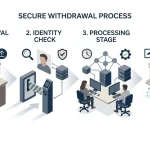
A withdrawal estimate is meaningful only when you know which part of the process it measures. There may be an operator review before payment is sent, followed by processing by the payment provider or bank. A displayed time can refer to either stage or combine them. Check the wording: “processed” does not necessarily mean the money has reached your account.
Instant Withdrawal Casinos UK: How Payouts Work
The first withdrawal can take longer if the operator needs to check documents before releasing funds. A specialist review reports an additional 12–24 hours for these checks on first-time withdrawals. Treat that as a reported example, not a fixed rule for every casino. If documents are requested, the payment timeline may not begin until the operator has received and accepted them.
The payment route also matters. A specialist review reports PayPal withdrawals clearing in roughly 4–6 hours on weekdays, with the estimate extending to 8–10 hours from Friday to Sunday. For debit cards, the same type of review gives 2–3 banking days after the operator’s review. These examples are not interchangeable: a banking-day estimate does not count weekends in the same way as an estimate expressed in hours, and neither should be read as a guarantee.
Bank transfers may involve a separate charge. A specialist review reports possible fees of £2–£5, depending on the bank’s policy. Before requesting payment, check both the casino’s stated terms and your bank’s charges. A fee may be applied outside the operator’s own processing stage, so a casino’s advertised withdrawal information may not describe the full cost.
Deposit and withdrawal availability are separate. A method shown for adding funds does not necessarily appear as a withdrawal option, and the terms may specify which routes can be used to receive winnings. Check the cashier and withdrawal rules rather than assuming that the same method works in both directions.
A method’s speed or availability does not establish that an operator is trustworthy. Nor does a payment claim prove that a casino supports Bitcoin: confirm the accepted withdrawal routes directly in the operator’s current terms. If you are comparing claims, look for the payment method, the point at which the clock starts, whether the estimate covers weekends, and any stated fees. Without those details, a short processing estimate may omit the steps that determine when the funds actually arrive.
A Register Entry Is Evidence, Not a Complete Verdict
A register check can connect a UK-facing casino domain to the company that holds its Gambling Commission account. For LeoVegas, the Commission’s public domain register lists leovegas.co.uk as an active UK-facing domain under operator account 39198. Its operator register identifies LeoVegas Gaming PLC with that same account number.
To verify a casino, match the domain in the public domain register to the operator account number, then confirm that number in the operator register.
The matching number is the link between the two records. You can check the domain entry, note the account number, then confirm that the operator entry carries it and names the company. This is more precise than relying on a casino’s branding alone: the brand name and the licensed legal entity are not necessarily identical.
Treat the result as evidence about the recorded domain-account relationship, not as a complete verdict on whether a casino is trustworthy. A register entry does not establish that every claim on the site is accurate, that every customer experience will be satisfactory, or that the operator has never had a compliance issue. Those questions require different evidence. The register also reflects the information available when you check it, so verify the entry directly rather than relying on an old screenshot or a copied account number.
When checking a site, compare the address you intend to use with the exact domain shown in the register. A familiar brand name by itself is not enough to establish that a particular web address belongs to the registered account. If the domain and operator details do not line up, pause before entering account or payment information and resolve the mismatch through the regulator’s records.
This method helps you assess a casino’s UK-facing identity without turning a register entry into an endorsement. A trustworthy choice depends on more than whether a record exists: the record is a starting point for verification, not a rating of the operator or a promise about what will happen after you sign up.
What Enforcement Records Can Reveal
A review score describes an opinion; an enforcement record documents regulatory action. The two answer different questions. Reviews may help you understand how customers describe an experience, but a regulator’s public records can identify the company associated with a domain and show whether the regulator has taken action against that company.
Pay by phone credit at UK mobile casinos
For example, the Gambling Commission’s register connects 333casino.com with Grace Media (Gibraltar) Limited, under account 57869. The domain is classified as a White Label domain. That entry gives you a traceable link between the consumer-facing website and the company recorded by the regulator. It is more informative than treating the brand name alone as the identity of the business responsible for operating the site.
The Commission’s enforcement record adds another kind of evidence. On 26 June 2025, it issued Grace Media a £60,000 financial penalty over breaches concerning self-exclusion and consent for direct electronic marketing. This tells you that the regulator took formal action against the company and identifies the areas involved. It does not, by itself, describe every customer’s experience or establish that every part of the business operated in the same way.
When assessing claims about a casino, keep those limits clear. A company’s name in an enforcement notice may differ from the brand shown on a website, so compare the operator named in the record with the domain information in the public register. Then read what the action concerned rather than relying on a headline or a review score. A record about marketing consent, for instance, is evidence about that compliance issue; it is not a measurement of payout speed or game quality.
Public records therefore support a more specific kind of assessment: who is connected to a domain, which company faced action, when it happened, and what conduct the regulator addressed. They provide evidence for scrutiny, not a complete verdict on whether a casino is trustworthy.
Regulatory Evidence
- Review scores are opinions, while enforcement records are documented regulatory actions
- Public registers provide a traceable link between a domain and the legal company
- Enforcement notices identify specific compliance breaches, such as marketing or self-exclusion issues
- Register entries are starting points for verification, not endorsements of trustworthiness
What Player Protection Looks Like in Practice
A casino’s safeguards matter because they give you ways to respond when spending or time online starts to exceed what you intended. They do not remove the risk of gambling, and their presence alone cannot establish that an operator is trustworthy. Look at what controls are available and what happens when you use them.
Remote operators must prompt new customers to set a financial limit before their first deposit and make account-level limit controls accessible. A limit can help constrain future gambling, but its effect depends on the type of limit and the operator’s rules. Read the account settings so you understand what is being capped, rather than assuming one control covers every kind of activity.
The timing of a change also matters. A reduction to a limit takes effect immediately. An increase is subject to a cooling-off delay, so you cannot raise a limit and use the higher amount straight away. This difference is deliberate: lowering exposure should not be held up, while raising it is not an instant change. If you are unsure whether a limit is working as intended, check the account information or contact the operator before continuing to play.
For a person who wants to stop gambling, limit controls may not be enough. Self-exclusion is a separate safeguard, and support is available outside the casino. The National Gambling Helpline can be reached on 0808 8020 133 and is open 24 hours a day. You can contact it for help with gambling-related concerns; you do not have to wait until a problem becomes severe.
These practical checks give a clearer picture than a general claim that a site is safe. Confirm that controls are available, understand the immediate effect of reducing a limit, and know where to turn for support. If you feel unable to stick to a limit or to stop, pause access to gambling and contact the helpline rather than relying on a casino setting alone.
Offshore Casino Sites for UK Players: Rules and Risks
How Identity Checks Affect Deposits and Withdrawals
Identity checks are part of opening and using a gambling account, not an optional step reserved for a later cash-out. Under UK rules, an operator must verify you before it lets you deposit or play. A registration form alone therefore does not mean the account is ready for real-money gambling: the operator must complete the required checks first.
The documents commonly requested are a photograph of your passport or driving licence and a recent utility bill. The photo ID helps establish who you are; the bill provides evidence of your address. Submit clear images and make sure the details can be read. If a document is unclear or does not match the information on your account, the operator may need you to provide acceptable evidence before it can finish checking your details.
This affects deposits directly. If verification is still outstanding, you cannot use the account to deposit or play. Complete the requested steps before treating the account as ready, and check that the operator has confirmed the review is complete rather than assuming that uploading files is enough.
Identity checks can also be relevant when you request a withdrawal. An operator may need to establish that the account holder’s details are consistent before completing its checks. If it asks for documents at that point, the withdrawal process cannot be treated as finished until the requested review has been resolved. This is separate from the time a payment method takes to transfer funds after an operator has approved a withdrawal.
Before you play, read the account’s instructions for submitting documents and use the operator’s stated secure upload route. If a check is pending, ask which document or detail remains outstanding; sending duplicate files without knowing what is missing may not resolve the issue. A trustworthy online casino should make its verification requirements and the status of your account clear. The practical test is whether you can identify what is required, provide it through the stated process and see whether the account is approved before depositing.
Is 333 Casino licensed for Great Britain?
Yes. The UK Gambling Commission register links 333casino.com to Grace Media (Gibraltar) Limited, account 57869, as a White Label domain.
What payment types are listed?
PayPal, debit cards and bank transfers are listed. Some welcome offers may exclude e-wallets.
What is the fastest withdrawal method?
PayPal is the fastest method listed, typically clearing in 4–6 hours on weekdays and 8–10 hours from Friday to Sunday. First-time withdrawals may take an additional 12–24 hours for document checks.
What is the context of GAMSTOP and self-exclusion?
Online operators in the Great Britain regime must participate in GAMSTOP, a self-exclusion scheme, and that participation has been compulsory since 31 March 2020. Grace Media was fined £60,000 in June 2025 for breaches involving self-exclusion and direct electronic marketing consent.
Casinos

£1 Minimum Deposit Casinos in the UK: What to Know
A £1 cashier minimum can allow a deposit, while promotion eligibility and withdrawals follow separate...

£10 Minimum Deposit Casinos in the UK: How It Works
A cashier minimum sets the entry point for funding an account; it does not determine...

£2 Minimum Deposit Casinos in the UK: What It Means
A cashier accepting £2 does not guarantee bonus eligibility or immediate access to withdrawals; those...

£20 Minimum Deposit Casinos in the UK: How They Work
A cashier minimum sets the smallest accepted deposit, while the balance remains separate from the...

£3 Minimum Deposit Casinos in the UK: Key Rules
The cashier threshold is only one rule; payment methods, bonus terms and play limits can...

£4 Minimum Deposit Casinos in the UK: Explained
A cashier minimum is only one account rule; game stakes, offer conditions and withdrawal thresholds...

£5 Minimum Deposit Casinos in the UK: How It Works
A cashier minimum sets the amount accepted for a deposit, while separate rules govern game...

Anjouan Casino Licence in the UK: What It Means
An Anjouan authorisation is separate from UKGC permission, so the licence alone does not establish...

Casino Apps in the UK: Mobile Play and Features
See how apps and browsers handle casino games, and what to consider for mobile play,...

Foreign Casinos for UK Players: Licensing and Rules
This guide explains how licensing, UK rules, GamStop, bonuses and payment checks apply to operators...

Instant Withdrawal Casinos UK: How Payouts Work
Payout speed depends on the full route from confirmed request to funds arriving, as well...

International Casinos for UK Players: What to Know
A practical guide to licensing, access, bonus terms and protections when an overseas operator accepts...

Pay by phone credit at UK mobile casinos
Pay by Phone routes a casino deposit through a participating network or payment partner, with...

Offshore Casino Sites for UK Players: Rules and Risks
The guide explains licensing, payments, identity checks and bonus terms without presenting a ranked shortlist....

Offshore casinos for UK players: what to check
A practical guide to licensing, bonus terms, crypto payments, verification and the protections lost outside...

British Casinos Outside GamStop: What to Know
GamStop covers participating UKGC-licensed operators, so its exclusion does not apply universally to every gambling...

Casino no-ID verification in the UK: how checks work
A document-free sign-up does not remove identity checks; UK-licensed casinos often verify details before the...

Casino Not on GamStop Instant Withdrawals: Key Factors
Withdrawal speed can depend on casino processing as well as the payment route and checks...

Casino sites not registered with GamStop UK: what to know
The guide explains where GamStop applies, what an overseas licence means, and which terms and...

No-ID-Verification Casino Withdrawals in the UK
Registration, identity checks and payment settlement are separate stages, so a quick deposit or payout...

Casinos Without a Swedish Licence: UK Rules
A licence from outside the UKGC does not place a casino under the Commission’s supervision,...

Casinos That Bypass GamStop: What It Means
GamStop restrictions apply within the UKGC framework, so licence status—not a casino’s label—defines the distinction....

Curacao Casino Licence UK: What Players Should Know
A Curacao licence identifies a licensing jurisdiction, but does not establish that an operator is...

Fast Withdrawal Casinos in the UK: What to Check
A payout is complete only when funds reach the selected account, so processing status alone...

Gibraltar Casino Licences in the UK: What to Check
A Gibraltar licence claim does not establish UKGC oversight or show which controls, payment terms...

Jackpot Mobile Casino UK: How Jackpots Work on Phones
A UK guide to how jackpot prizes are built, when they are paid, and what...

Merkur Casino Online UK: Slots and Safety Checks
A practical guide to UK-licensed Merkur slots, covering spin controls, demo access, stakes, bonuses and...

No Account Casino UK: How the Process Works
No-account services can simplify the entry step, but operators may still keep customer records and...

No Minimum Deposit Casinos in the UK: What £1 Means
A low cashier minimum does not automatically qualify a deposit for a promotion or make...

Non-Gamban Casinos in the UK: What the Claim Means
A claim that a casino is not blocked by Gamban does not establish endorsement, UK...

Non-GamStop Curaçao Casino Sites and UK Exclusion
The guide explains the reach of GAMSTOP and individual casino exclusions, and how to assess...

Non-GAMSTOP European Casinos: What to Know
GAMSTOP applies to participating online operators, while this guide avoids unverified lists and treats bonus...

Non-UK Licence Casinos: What the Licence Means
A licence identifies an operator’s regulator, but does not guarantee UK oversight or the same...

Non-UK-Registered Casinos: How Regulation Works
The guide separates company registration from gambling oversight and explains how payments, bonus terms and...

Non-UK-Regulated Casinos: Rules for UK Players
UKGC authorisation depends on serving customers in Great Britain, while an overseas licence does not...

Non-UKGC Licensed Casinos: Rules and Risks
The guide explains the difference between UKGC oversight and overseas licensing, including what each licence...

Malta MGA Licence and UK Online Casinos: What It Means
An MGA licence covers Malta’s regulatory system; serving customers in Great Britain requires separate UKGC...

Online casino no registration UK: browser play explained
Browser play avoids installing casino software, but it does not by itself remove account requirements...

Online Casinos With No Sister Sites in the UK
Separate ownership, platform control and licensing to assess whether two casino brands genuinely belong to...

Online Slots Not on GamStop: What It Means
GamStop status depends on whether a gambling operator is within UKGC jurisdiction, not on a...

Quick Withdrawal Casinos in the UK: Payout Timing
Payout speed depends on processing, the cashier method and whether bonus wagering or other conditions...

Safe Online Casinos in the UK: Legal Checks and Protections
A UKGC licence is the starting point, but domain, operator, payment, bonus and dispute checks...

Same-Day Payout Casinos in the UK: What to Know
A withdrawal’s arrival time depends on casino processing, the selected payment route and conditions that...

Online Casino Payouts in the UK: RTP Explained
RTP and house edge describe expected returns, while withdrawal speed concerns access to funds; neither...

Trusted Casinos Not on GamStop UK: What to Check
The guide separates operator claims from independent oversight and explains the limits of protections, reviews,...

Trusted UK Casino Checks: Licensing and Status
A practical guide to licensing, regulatory records, crypto claims, app checks, bonus terms and payment...

USA Casinos for UK Players: Legal Status and Risks
A practical guide to UKGC licensing, overseas access, payment risks, bonus terms and limits at...

VPN-Friendly Casinos in the UK: Access and Checks
A practical overview of VPN access, casino rules, location checks and payment considerations for UK...